 Ferndale Exterior
 Sudden Valley's Roofs Take a Different Kind of Beating
Sudden Valley sits in a part of Whatcom County where the climate doesn't let a roof coast. Homes here deal with driving rain that comes in sideways during winter storms, a long stretch of the year where moss and moisture never really dry out, and the salt-tinged air that moves inland off the Puget Sound and Bellingham Bay corridor. None of these things by themselves is unusual for Western Washington. Together, over years, they wear a roof down faster than most homeowners expect.
The tree cover that makes Sudden Valley a nice place to live is also part of the problem. Heavy shade keeps roof surfaces damp longer after a storm, which is exactly what moss, moss spores, and organic debris need to take hold. Add in gutters that fill with needles and leaf litter faster than they would on an open lot, and you get a roof that's fighting moisture retention on top of everything the weather is already throwing at it.
Roof repair in this kind of environment isn't just about patching a leak. It's about understanding why that spot failed in the first place, and making sure the fix doesn't just mask the problem for a season before it comes back.
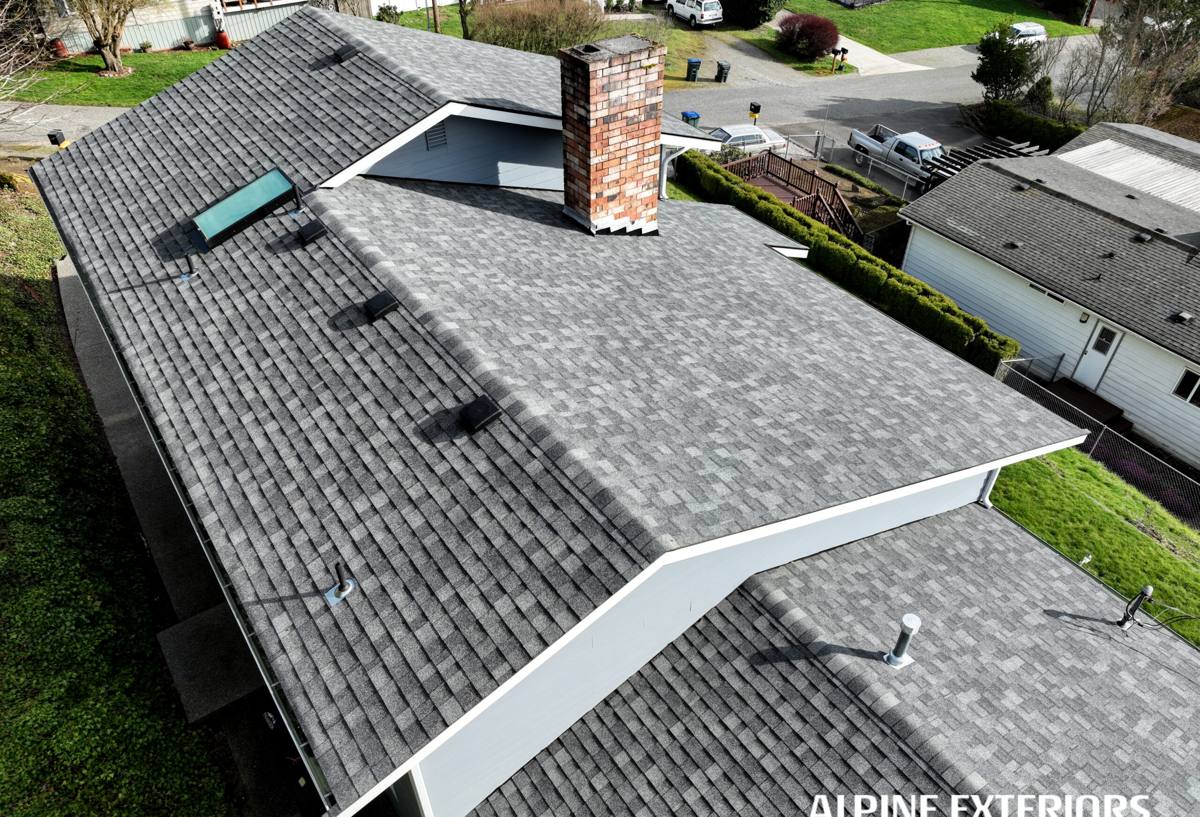
Common Roof Repair Problems We Find in Sudden Valley Homes
Every roof is different, but after years of working on homes in this part of Whatcom County, a handful of issues show up over and over. Knowing what to watch for can help you catch a small problem before it becomes a big one.
- Moss and lichen growth along shaded slopes — especially north-facing roof planes that stay damp longer, where moss roots work under shingle edges and lift them over time.
- Granule loss on asphalt shingles — driving rain and repeated wet-dry cycles wear down the protective granule layer, leaving shingles brittle and more prone to cracking.
- Flashing failures around chimneys, vents, and skylights — these transition points are where most leaks actually start, not in the open field of the roof.
- Clogged or damaged gutters causing water backup — debris from surrounding trees traps moisture against the roof edge and fascia, which accelerates rot.
- Soft spots or sagging decking — usually a sign that a leak has been active longer than anyone realized, and the plywood underneath has started to absorb water.
- Nail pops and lifted shingle tabs — often from wind events, and an easy entry point for wind-driven rain if left alone.
What a Correct Roof Repair Actually Involves
A roof repair done right isn't just sealing the spot where water is showing up inside the house. Water rarely enters where it appears on a ceiling — it travels along rafters, decking, and underlayment before it finds a way in, so a proper repair starts with tracing the actual entry point, not just treating the symptom.
Diagnosis Before Repair
We start by getting on the roof, not just looking at it from the ground. That means checking flashing, examining shingle condition around the suspected area, checking the attic side where accessible for water staining or damp insulation, and confirming whether the issue is isolated or a sign of broader wear across the roof.
Matching Materials and Technique
A patch that doesn't match the surrounding roofing — in material, in exposure, in fastening pattern — tends to fail faster and stand out visually. We repair using materials and methods consistent with how the rest of the roof was installed, so the fix behaves the way the roof around it behaves in wind and rain.
Addressing the Cause, Not Just the Symptom
If moss contributed to the failure, we address the moss and the conditions that let it grow, not just the shingle it damaged. If a clogged gutter backed water up under the roof edge, we deal with the gutter too. A repair that ignores the underlying cause is a repair that gets scheduled again next year.
Our Roof Repair Process, Start to Finish
- Initial inspection. We assess the roof in person, document what we find, and identify both the immediate problem and any contributing conditions.
- Honest assessment. We tell you what actually needs to happen — sometimes that's a targeted repair, sometimes it's a larger section, and occasionally we'll tell you a repair isn't the right long-term answer.
- Clear scope and pricing. Before any work starts, you know what's being done and what it costs. No surprise add-ons once we're up there.
- The repair itself. We remove and replace damaged materials, correct flashing or underlayment issues where needed, and match the repair to the existing roof system.
- Cleanup and debris check. Gutters and roof surfaces are cleared of loosened debris so water can move off the roof the way it's supposed to.
- Final walkthrough. We show you what was done and what to watch for going forward, especially if there are conditions on your property — heavy shade, older flashing elsewhere — that could cause future issues.
Repair or Replace? How We Help You Decide
Not every roof problem in Sudden Valley needs a full replacement, and not every leak can be permanently solved with a patch. The honest answer depends on the roof's age, how widespread the damage is, and how much of the roof's lifespan is left. Here's generally how we think through it:
| Factor | Leans Toward Repair | Leans Toward Replacement |
|---|---|---|
| Roof age | Under 15-20 years, well within expected lifespan | Near or past the material's expected service life |
| Extent of damage | Isolated to one section, flashing point, or slope | Widespread granule loss, multiple failed areas |
| Underlying decking | Solid, no soft spots or rot found | Soft, spongy, or visibly damaged decking |
| Moss/moisture history | First occurrence, addressed early | Recurring moss damage across multiple seasons |
| Overall roof condition | Rest of the roof is sound and weathering normally | Rest of roof shows similar wear to the failed area |
We won't recommend a full replacement when a targeted repair will genuinely hold up — but we also won't sell you a patch on a roof that's telling us it's done. You'll get our honest read either way.
Material Considerations for Repairs
Most homes in Sudden Valley are roofed in asphalt composition shingles, with some metal roofing on newer builds or additions. When we repair, we work with the material already on your roof rather than pushing a different product into a repair situation where it doesn't belong.
Asphalt shingles are the most common repair we handle, and matching color, style, and age-appropriate exposure matters for both appearance and how the repair sheds water. Metal roof repairs require different fastening and sealant approaches, and we're careful about thermal movement, since metal expands and contracts more than shingle roofing does across our seasonal temperature swings.
One thing worth being upfront about: any repair on an older roof involves a tradeoff. Older shingles can be brittle, and matching an exact color from a discontinued product line isn't always possible. When that's the case, we'll tell you before starting, so there are no surprises about how the finished repair looks against the surrounding roof.
Between Repairs: Maintenance That Actually Extends Roof Life
Given how much moss and moisture pressure Sudden Valley roofs deal with, a little regular attention goes a long way toward avoiding repeat repair calls. This isn't about aggressive scrubbing or pressure washing, which can do more harm than good on shingle roofs — it's about staying ahead of the conditions that cause damage.
- Keep gutters clear of needles and leaf debris, especially heading into fall and after windstorms.
- Have moss growth treated before it spreads across a full slope, not after.
- Trim back overhanging branches that keep roof sections shaded and slow to dry.
- Check attic ventilation — poor airflow traps moisture underneath the roof deck and accelerates deterioration from the inside.
- After major storms, do a visual check from the ground for missing or lifted shingles.
- Schedule a roof check every year or two, even with no visible problems, so small issues get caught while they're still small.
Why a Crew That Already Works Sudden Valley Matters
Roof repair isn't a one-size-fits-all trade. A crew that regularly works Sudden Valley and the surrounding Whatcom County area has already seen how the shade patterns, moisture cycles, and weather exposure specific to this kind of setting affect roofs over time. That familiarity shapes how we diagnose a leak, what we watch for beyond the obvious symptom, and how we prioritize the parts of the job that actually prevent a repeat call.
It also means straightforward logistics — scheduling, follow-up, and being reachable if a question comes up after the work is done. We're not driving in from out of the area for one job; this is the region we work in every week.
If you've got a leak, a shingle problem, or a roof that just doesn't look right anymore, we're happy to take a look and give you a straight answer about what it actually needs. Reach out for a free, no-pressure estimate using the form below — we'll walk the roof, tell you what we find, and let you decide from there.