 Ferndale Exterior
 Siding That Has to Work Year-Round Around Sudden Valley
Homes in the Sudden Valley area take a different kind of beating than homes further inland. Between salt-laden air moving in off the water, driving rain that comes sideways more often than straight down, and a moss season that seems to stretch longer every year, exterior walls here are under near-constant pressure. Siding that would hold up fine in a drier part of Washington can fail early out here if it isn't the right material, installed the right way.
We do siding installation across Whatcom County out of Ferndale, and Sudden Valley is one of the areas we get called back to most — not because the work fails, but because word travels when a crew actually understands what this climate does to a house over ten, twenty, thirty years. This page is about one job specifically: installing siding correctly on a Sudden Valley home, with the materials and details that hold up here.
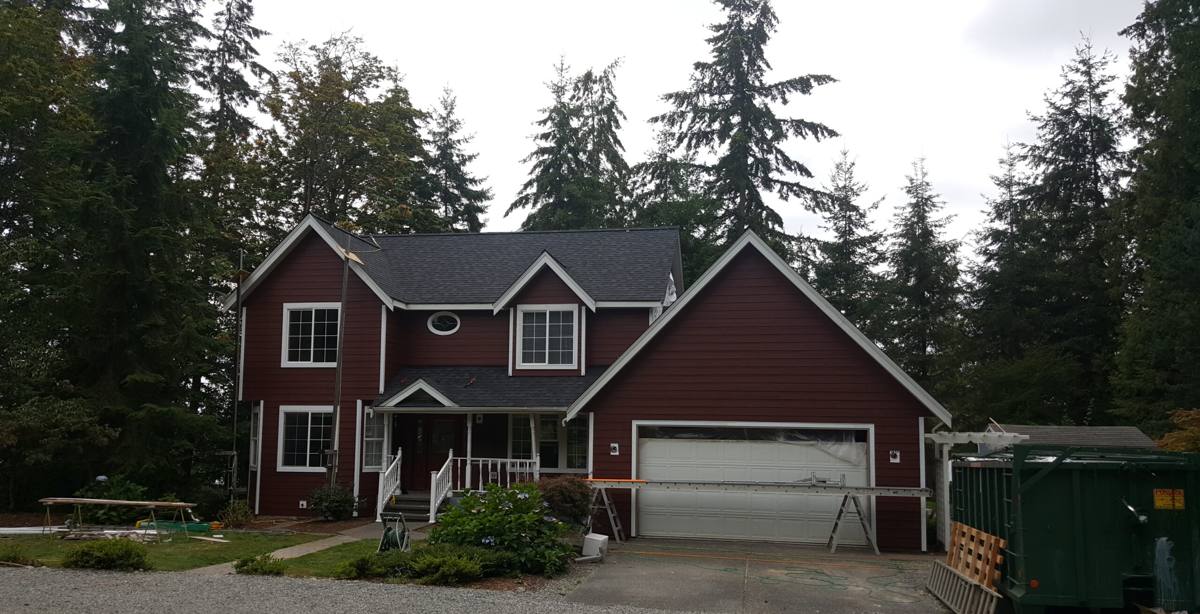
What This Climate Actually Does to Siding
It helps to be specific about the mechanisms at work, because "the weather is rough here" doesn't tell you much on its own.
Salt Air and Moisture Combined
Airborne salt accelerates corrosion on any exposed metal fasteners, flashing, and trim components, and it also draws moisture — salt is hygroscopic, meaning it pulls humidity out of the air and holds it against whatever surface it settles on. That's a problem for materials that swell, warp, or rot when they stay damp longer than they should.
Driving Rain, Not Just Rain
Whatcom County doesn't just get a lot of precipitation — it gets wind-driven rain that hits siding at an angle instead of running straight down and off. That means water gets pushed up under laps, into seams, and behind trim in ways vertical rain never would. A siding system's water management details (how laps overlap, how flashing directs water back out, how the weather-resistive barrier behind the siding handles anything that gets past the surface) matter more here than in calmer climates.
Moss and Sustained Dampness
The long moss season isn't just cosmetic. Moss holds moisture directly against the siding surface for extended periods, especially on north-facing walls and anywhere shaded by trees or fencing. Materials that can't tolerate sustained dampness will show it — swelling, delamination, or paint failure — well before their expected lifespan is up.
What Correct Siding Installation Actually Involves
A siding job can look finished and still be wrong underneath. The difference between siding that lasts and siding that causes problems in five years almost always comes down to details that aren't visible once the job is done.
Weather-Resistive Barrier First
Before a single piece of siding goes up, the wall needs a properly lapped, properly taped weather-resistive barrier. This is the backup system — it's what protects the sheathing and framing if any water does get past the siding, which it eventually will on every house, every material. Skipping or rushing this step is one of the most common causes of hidden rot behind siding that looks perfectly fine from the street.
Flashing at Every Penetration
Windows, doors, hose bibs, light fixtures, vents — every single penetration through the siding is a place water can get in if it isn't flashed correctly. In a driving-rain climate, this isn't optional detailing, it's the difference between a wall that sheds water and one that slowly saturates from the inside.
Correct Fastening and Clearances
Fiber cement siding has manufacturer-specified nailing patterns, fastener types, and minimum clearances from grade, roof lines, and decks. Getting these wrong doesn't usually cause an immediate problem — it causes a problem three, five, or ten years down the road, which is exactly why it's so often done wrong by crews that aren't specifically trained on the product.
Field Cuts Sealed and Primed
Every cut edge on fiber cement siding needs to be sealed per the manufacturer's instructions before it's installed. An unsealed cut edge left exposed to Whatcom County's rain and humidity is a direct path for moisture into the material.
Why We Install Only James Hardie Fiber Cement
We don't install vinyl, LP SmartSide, cedar, or primed spruce siding, and we don't install other fiber cement brands. That's a deliberate standard, not a default, and it's worth explaining why for a house sitting in salt air with a long moss season.
James Hardie fiber cement is non-combustible and dimensionally stable — it doesn't expand and contract with moisture the way wood-based products do, which matters directly in a climate that cycles between saturated and dry. Hardie's HZ5 product line is engineered specifically for climates with more moisture exposure, which describes this part of Washington well. The factory-applied ColorPlus finish is baked on under controlled conditions, giving more consistent, longer-lasting color and moisture resistance than field-applied paint, and it comes with its own multi-year finish warranty layered on top of the product warranty.
None of that means other products are junk — vinyl is inexpensive and low-maintenance in mild climates, LP SmartSide has genuine fans, and cedar has real aesthetic appeal for the right homeowner. But when we weigh moisture behavior, long-term maintenance burden, and how a material performs specifically in salt air with driving rain and heavy moss pressure, James Hardie is the product we're willing to put our name behind and install to spec, every time. That's the whole reason we standardized on one manufacturer instead of offering a menu of options.
How Our Sudden Valley Siding Process Works
- On-site assessment. We walk the home, check current siding and trim condition, identify moisture-prone areas (shaded walls, low clearances, poor grading), and take measurements.
- Product and color selection. We review Hardie's plank, shingle, and panel options along with the ColorPlus palette suited to the home's style and exposure.
- Written estimate. A clear scope of work — what's being removed, what barrier and flashing work is included, fastening approach, and total cost — before anything is scheduled.
- Tear-off and inspection. Old siding comes off and we inspect the sheathing underneath for any hidden moisture damage before closing the wall back up.
- Weather-resistive barrier and flashing. Properly lapped barrier, sealed seams, and flashing at every window, door, and penetration.
- Hardie installation to manufacturer spec. Correct nailing pattern, fastener type, clearances, and sealed field cuts.
- Trim, caulking, and final walkthrough. Finished detailing and a walkthrough so you know exactly what was done and what warranty coverage applies.
Comparing Siding Materials in This Climate
| Material | Moisture Behavior in Salt Air / Driving Rain | Moss Season Durability | Typical Maintenance |
|---|---|---|---|
| James Hardie Fiber Cement | Dimensionally stable, engineered HZ lines for moisture-prone regions | Resists sustained dampness well when installed and maintained correctly | Periodic washing; factory finish reduces repainting frequency |
| Vinyl | Doesn't rot, but can warp or crack with temperature swings and impact | Doesn't feed moss growth directly but seams can trap moisture | Low, but color can fade and panels can't be spot-repainted easily |
| Cedar | Absorbs moisture readily; needs consistent sealing/staining to perform | Prone to moss and mildew without regular upkeep | High — regular staining, sealing, and moisture monitoring |
| LP SmartSide (engineered wood) | Treated to resist moisture but still wood-based; edge sealing critical | Requires diligent maintenance in sustained damp conditions | Moderate to high — finish upkeep and edge inspection |
What Drives the Cost of a Siding Installation
Every home is different, so we won't quote a number here that doesn't mean anything until we've actually seen the house. What we can tell you is what moves the price up or down:
- Total square footage of siding being replaced, including how many corners, gables, and dormers add cutting complexity
- Condition of the sheathing underneath — hidden rot found during tear-off adds repair scope
- Product line and profile selected (lap plank, shingle-style panels, board-and-batten)
- Amount of trim, window, and door detail work involved
- Home accessibility — steep grades, tight lot lines, or limited staging area around the house
- Whether existing siding needs full removal versus working with an already-stripped wall
Signs Your Sudden Valley Home May Need New Siding
- Visible warping, cracking, or bulging panels, especially on north-facing or shaded walls
- Persistent moss or dark staining that returns quickly after cleaning
- Soft spots when you press on the siding near the bottom edges or around windows
- Paint that's peeling, bubbling, or failing faster than it used to
- Rising utility bills that suggest failing insulation behind aging siding
- Visible gaps at trim, corners, or window flashing
Why Hiring a Crew That Already Works in Sudden Valley Matters
Siding installation isn't a generic skill that transfers identically from one region to another. A crew that mostly works drier inland climates may not think twice about clearance details or barrier lapping that are non-negotiable out here. A crew that regularly works Sudden Valley and the surrounding Whatcom County lake and coastal areas has already seen what happens when those details get skipped — and builds every install around avoiding it.
That familiarity also shows up in smaller, practical ways: knowing which sides of a house in this area tend to hold moss longest, understanding how local permitting and inspection typically go, and being straightforward about what a house actually needs versus what's being upsold.
After Installation: Keeping Siding Performing
James Hardie siding installed to spec is low-maintenance, not no-maintenance. A periodic gentle wash (garden hose and a soft brush, not a pressure washer aimed directly at seams) keeps moss and grime from building up. Walking the exterior once or twice a year to check caulking at trim and penetrations catches small issues before they become water intrusion problems. Keeping vegetation trimmed back from walls helps reduce the shaded, damp conditions moss depends on.
If you're weighing whether your Sudden Valley home's siding needs attention or full replacement, we're glad to take a look and give you a straight answer — including if the honest answer is that repairs will do for now. Reach out for a free, no-pressure estimate using the form below.