 Ferndale Exterior
 Siding Replacement Built for Sudden Valley's Conditions
Homes in and around Sudden Valley near Ferndale deal with a specific combination of weather that most siding products simply weren't designed for. Moist marine air moves in off the water, driving rain comes in sideways during fall and winter storms, and shaded, tree-lined lots hold onto damp air long after the rest of Whatcom County has dried out. That combination is exactly what breaks down siding early — not through one dramatic failure, but through years of slow moisture absorption, swelling, and surface breakdown that homeowners don't notice until the damage is already behind the wall.
This page covers what siding replacement actually means for a Sudden Valley property: what the climate demands, what a correct installation looks like, and why the crew doing the work matters as much as the material going on the wall.
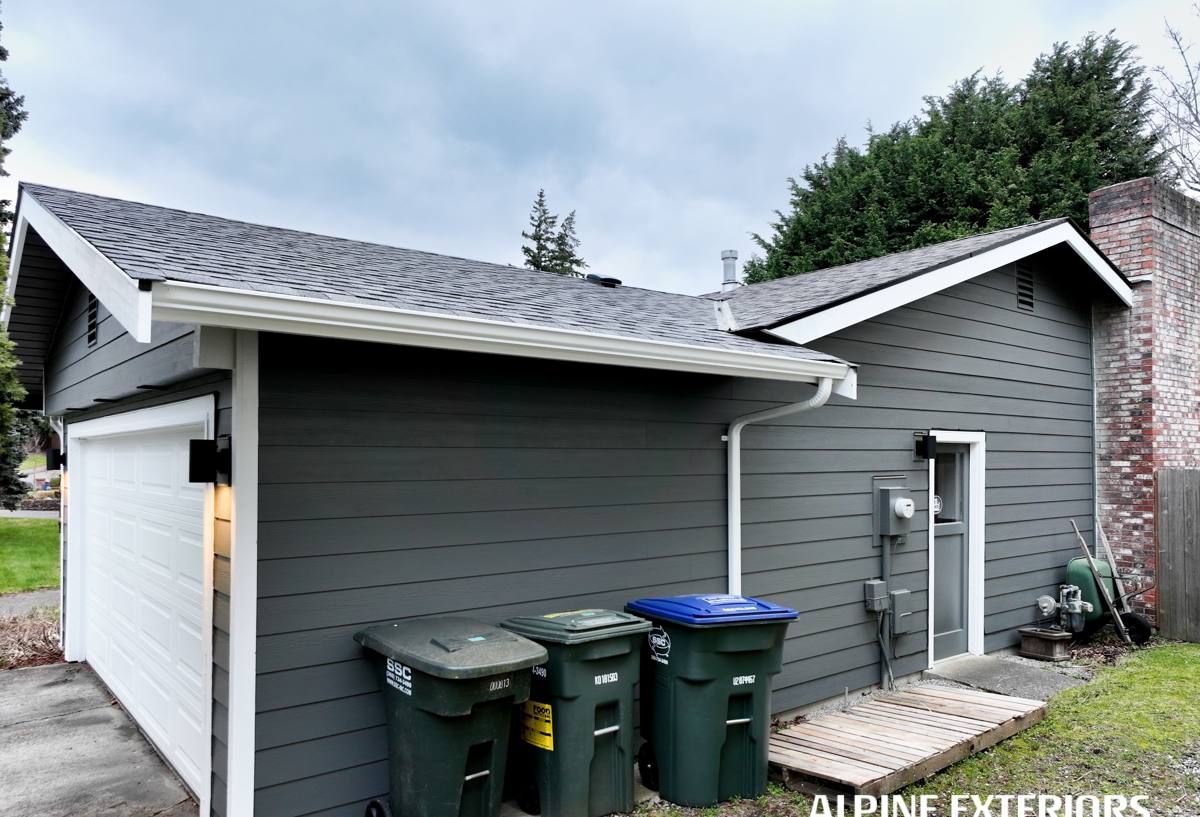
Why This Corner of Whatcom County Is Hard on Siding
Salt Air and Constant Moisture
Proximity to the water means siding here is exposed to salt-laden air more often than homes further inland. Salt air accelerates corrosion of fasteners and trim metal, and it keeps humidity levels elevated even on days without visible rain. Materials that rely on paint film or surface sealants to keep moisture out are working overtime in this environment, and any gap in that protection lets water in faster than it would in a drier climate.
Driving Rain
Storms coming off the water don't fall straight down — wind pushes rain sideways into wall assemblies, seams, and butt joints. Siding and flashing details that work fine in calm weather can fail under sustained wind-driven rain, especially around windows, corners, and anywhere two pieces of siding meet.
A Long Moss Season
Tree cover and lake-adjacent humidity mean shaded exterior walls stay damp longer, which is exactly what moss, algae, and mildew need to take hold. On the wrong siding material, that constant surface moisture works its way into seams and fastener holes and starts breaking things down from the inside. On the right material, it's a surface issue that hose-and-brush maintenance handles.
Signs Sudden Valley Siding Has Reached the End of Its Life
Because moisture damage develops slowly, a lot of homeowners wait too long before calling for an evaluation. Watch for:
- Soft or spongy spots when you press on siding, especially near the bottom courses
- Persistent moss or algae growth that comes right back after cleaning
- Paint that's peeling, bubbling, or needing repainting more often than every few years
- Visible warping, cupping, or gaps opening up between boards or panels
- Rising heating bills or drafty rooms, which can point to a compromised weather barrier behind the siding
- Rot or discoloration around window trim, corner boards, or anywhere siding meets a roofline
Any one of these on its own might just need a repair. Several at once, especially on a home more than 15-20 years old, usually means the whole siding system has reached the point where patching stops being cost-effective.
What a Correct Siding Replacement Actually Involves
Replacing siding is not simply removing old boards and nailing up new ones. In a wet, wind-exposed environment like this one, most siding failures trace back to what's underneath the visible surface, not the material itself. A correct job includes:
Tear-Off and Sheathing Inspection
Once old siding comes off, the sheathing underneath gets inspected for rot, soft spots, or existing water damage. Any compromised sheathing needs to be repaired or replaced before anything new goes up — covering damaged wood with new siding just hides a problem that will keep spreading.
Weather-Resistive Barrier
A new, properly lapped weather-resistive barrier (housewrap) goes over the sheathing before siding installation begins. This layer is what actually stops bulk water from reaching the wall structure — the siding itself is the first line of defense, but the barrier behind it is what protects the home if any water does get past the surface.
Flashing at Every Vulnerable Point
Windows, doors, roof-to-wall intersections, and any horizontal trim need properly integrated flashing so water is directed out and away from the wall, not trapped behind it. In a driving-rain environment, flashing details are often the difference between siding that lasts decades and siding that causes a rot problem in five years.
Correct Fastening and Clearances
Fiber cement siding has manufacturer-specified nailing patterns, fastener types, and minimum clearances from grade, decks, and roof lines. Skipping these specs to save time is one of the most common causes of premature siding failure, and it's also one of the easiest things for an inexperienced crew to get wrong.
Factory-Finished Material
We install pre-finished siding rather than field-painting after installation. A factory finish is more consistent and more durable than a job-site paint job, which matters in a climate where the finish is what stands between the material and constant moisture.
Why We Install Only James Hardie Fiber Cement
We standardized on James Hardie fiber cement siding and don't install vinyl, LP SmartSide, or other engineered wood products. That's not a marketing position — it's a decision based on what holds up in exactly the kind of environment Sudden Valley sits in.
Fiber cement doesn't absorb and swell the way wood-based products can, and it doesn't soften or deform in sustained heat and moisture the way vinyl can. It's non-combustible, which matters for wildfire-conscious insurance underwriting in Washington. James Hardie's ColorPlus factory finish is baked on and backed by its own finish warranty, and the HZ5 product line is specifically engineered for climates with significant moisture exposure — which describes this part of Whatcom County well. We'd rather install fewer products correctly than offer every option and let homeowners gamble on which one holds up.
Our Siding Replacement Process
| Step | What Happens |
|---|---|
| Site evaluation | We walk the exterior, check current siding condition, and look for existing moisture or rot issues before quoting anything |
| Written estimate | A clear scope of work and price, including what's being replaced and what siding line and color are recommended |
| Tear-off | Old siding and trim removed; sheathing inspected and any needed repairs identified |
| Weather barrier and flashing | New housewrap installed with proper laps; flashing integrated at windows, doors, and transitions |
| Siding installation | James Hardie panels or planks installed to manufacturer spec, including fastening and clearance requirements |
| Trim and detail work | Corner boards, trim, and caulking finished for a clean, weather-tight result |
| Final walkthrough | We review the finished work with the homeowner before calling the job complete |
What Affects the Cost of Siding Replacement
| Factor | Why It Matters |
|---|---|
| Home size and wall area | More square footage means more material and labor hours |
| Existing sheathing condition | Rot or water damage found during tear-off adds repair work before new siding can go up |
| Number of stories | Multi-story homes require more scaffolding, staging, and safety setup |
| Trim and architectural detail | Corners, dormers, and multiple roof intersections add labor beyond flat wall runs |
| Product line chosen | Hardie's standard, HZ5, and HZ10 lines and various profiles carry different material costs |
| Site access | Sloped lots, tree cover, or tight lake-adjacent lots can slow staging and material handling |
We don't quote off square footage alone — every estimate follows an in-person look at the home, because the condition underneath the old siding often matters more to the final price than the size of the house.
Why Local Experience in Sudden Valley Matters
A crew that regularly works this area already knows which details tend to fail here — where wind-driven rain hits hardest, which wall orientations hold moss longest, and how tree cover changes drying time after a storm. That's knowledge you don't get from a general contractor who works all over Western Washington and treats every job the same. It shows up in small decisions: extra attention to flashing on a rain-exposed wall, choosing a Hardie color and finish that resists the local moss and mildew pattern, and building in clearances that account for damp, shaded conditions rather than a generic spec sheet.
Caring for Your New Siding
James Hardie siding is low-maintenance, but "low-maintenance" isn't "no-maintenance," especially in a moss-prone environment. A simple annual routine keeps it looking right for decades:
- Rinse the exterior with a garden hose once or twice a year to clear pollen, dust, and early moss growth
- Check caulking around windows and trim annually and touch up as needed
- Trim back tree branches and vegetation that keep walls shaded and damp
- Inspect gutters each fall so overflow doesn't run down and saturate wall sections
- Address any impact damage or chipping promptly rather than letting it sit
If you're seeing early signs of wear on your current siding, or you're just ready to stop patching and replace it right, we're happy to come take a look. Fill out the form below for a free, no-pressure estimate on your Sudden Valley home.