 Ferndale Exterior
 Deck Building Built for Sumas, Not a Catalog Somewhere Else
Sumas sits close enough to Ferndale and the rest of Whatcom County that it shares the same weather story: wet winters, a marine air layer carrying salt off the Sound, and long stretches of the year when everything outdoors stays damp longer than it should. A deck built here has a harder job than a deck built in a dry inland climate, and it needs to be designed with that in mind from the footings up, not just picked out of a catalog and nailed together.
We build and repair decks for homeowners throughout this part of Whatcom County, and Sumas properties tend to have a few things in common: tree cover that keeps surfaces shaded and slow to dry, ground that stays soft into late spring, and enough driving rain through the fall and winter that any weak point in a deck's water management gets found out fast. None of that is a reason to avoid building a deck. It's a reason to build one correctly.
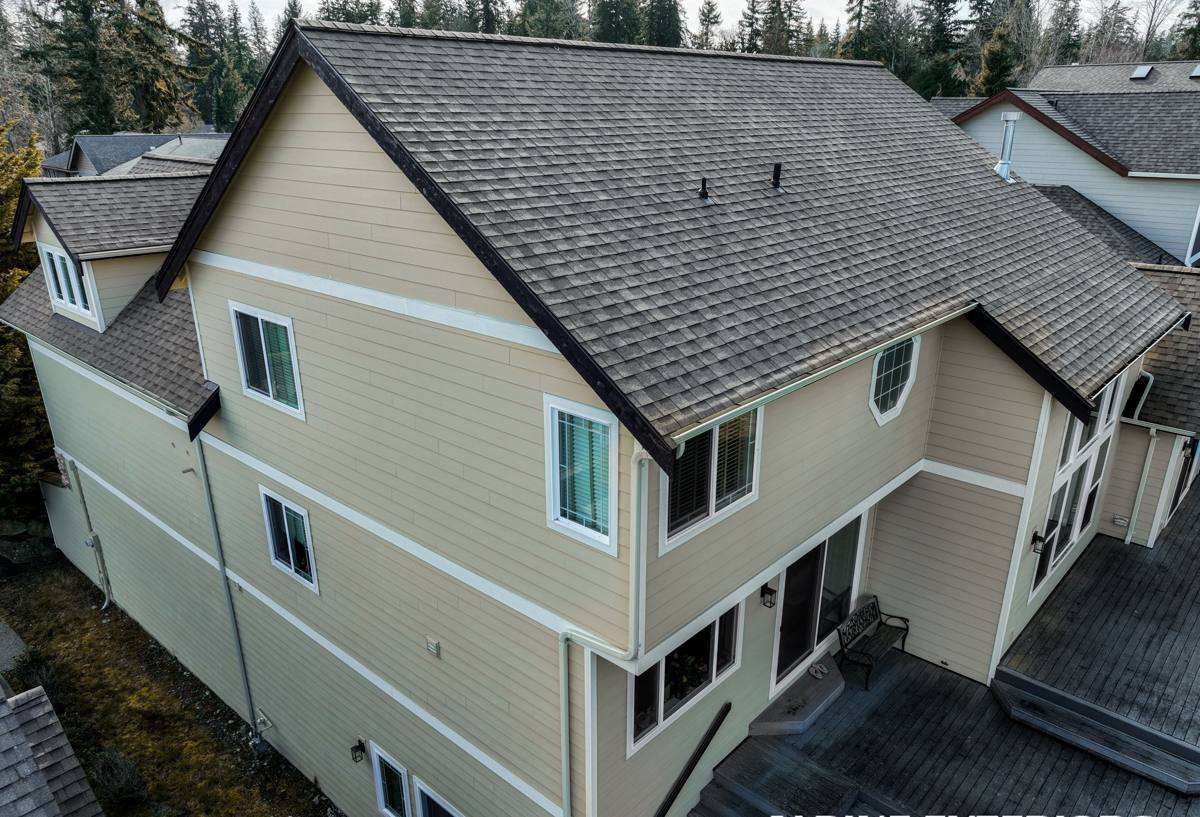
What the Local Climate Actually Does to a Deck
It helps to understand the specific ways this climate works against outdoor wood and composite structures, because it changes almost every decision in the build.
Salt air
Even well inland from open water, coastal Whatcom County air carries enough salt to accelerate corrosion on fasteners, hardware, and any exposed metal connectors. Standard hardware store screws and brackets will rust and stain a deck within a few seasons out here.
Driving rain
Storms in this region rarely fall straight down. Wind-driven rain gets pushed sideways under railings, into ledger board connections, and behind fascia boards where it can sit against wood that never fully dries out. Most of the rot we find in older decks starts at these hidden entry points, not on the open decking surface.
Moss and prolonged dampness
Shaded, tree-covered lots in and around Sumas hold moisture on deck surfaces for weeks at a time in fall and winter. Moss and algae aren't just a slip hazard and a cosmetic problem — they hold water against the board surface, which speeds up decay in wood and can dull and stain composite decking if it isn't cleaned periodically.
Put together, that means the biggest threats to a Sumas deck aren't dramatic. They're slow, quiet, and invisible until a board feels soft underfoot or a railing post wiggles more than it should.
What a Correct Deck Build Actually Involves
A deck that holds up here is really three separate systems working together: the structure, the water management, and the wear surface. Skipping or shortcutting any one of the three shortens the life of the whole thing.
Footings and framing
Footings need to be set below frost depth and sized for the soil conditions on the lot, which can vary block to block. Framing lumber should be rated for ground contact or exterior exposure where it's within a few inches of soil or vegetation, and every joist hanger, post base, and structural screw should be corrosion-resistant hardware — not standard interior-grade fasteners that will streak and weaken over a few wet seasons.
Ledger attachment and flashing
Where a deck attaches to the house, the ledger board connection is the single most important water-management detail on the entire structure. It needs proper flashing that directs water out and away from the house band board, not a bead of caulk hoping to hold back years of driving rain. This is the connection point that causes the most expensive hidden damage when it's done wrong, because water gets behind the siding and into the house framing before anyone notices.
Decking surface and drainage
Boards need consistent, correct gapping so water can drain through rather than pool on the surface. Under-deck drainage or a slight slope away from the house keeps water moving instead of sitting. On lower decks close to grade, we also think about airflow underneath — stagnant, shaded air under a deck is exactly the environment moss and rot prefer.
Choosing Decking Material for a Sumas Property
There's no single "best" decking material for every yard — it depends on how much sun and shade the lot gets, how much upkeep the homeowner wants to do, and budget. Here's how the common options actually perform in this climate.
| Material | How it holds up in salt air & rain | Moss/algae behavior | Maintenance |
|---|---|---|---|
| Pressure-treated wood | Good if hardware is corrosion-resistant; needs sealing to control moisture cycling | Can develop moss in shaded areas if not cleaned | Annual cleaning, periodic re-staining or sealing |
| Cedar | Naturally rot-resistant, ages gracefully, but softer surface | Prone to moss/algae without regular cleaning | Regular cleaning, occasional oil or sealant |
| Composite decking | Excellent resistance to rot and corrosion issues; hardware still needs to be corrosion-resistant | Surface can stain from algae; needs periodic washing | Low — occasional washing, no staining or sealing |
| PVC decking | Very good moisture resistance; doesn't absorb water | Least prone to moss retention of the group | Low — washing only |
Our honest take: for shaded, damp lots common around Sumas, composite or PVC decking usually earns its higher upfront cost back in reduced maintenance over the years. For sunnier lots with good airflow, quality treated lumber or cedar can perform well and costs less to install, as long as the homeowner is willing to keep up with cleaning and sealing.
Railings, Fasteners, and the Details That Get Skipped
Railings and hardware are where a lot of decks quietly fail early, because they're easy to underspec and the problems don't show up right away.
- Use stainless or coated corrosion-resistant fasteners throughout — not just at visible connection points
- Check that post bases have proper standoff from standing water and aren't sitting in a low spot that collects rain
- Confirm railing post connections are through-bolted into framing, not just screwed to fascia
- Verify flashing at the ledger board is continuous, not patched with caulk alone
- Make sure decking gaps are consistent for drainage, especially near the house wall
- Ask what warranty covers hardware and fasteners specifically, not just the decking boards
Our Deck Building Process
We keep the process straightforward because most homeowners just want to know what's happening and when.
1. On-site assessment
We look at the lot's drainage, sun and shade exposure, soil conditions, and how the deck will connect to the house. For a replacement, we also check the existing structure for hidden rot or damage that should inform the new build.
2. Design and material selection
We talk through layout, railing style, and decking material with the climate factors above in mind, and put together a clear, honest estimate — no vague allowances that turn into surprise costs later.
3. Permitting
Most new decks and many significant repairs require a permit through the local jurisdiction. We handle the paperwork and inspections so the homeowner isn't the one tracking that down.
4. Build
Footings, framing, flashing, decking, and railings, in that order, with each stage built to hold up to the specific water and moisture exposure of the site.
5. Final walkthrough
We walk the finished deck with the homeowner, confirm everything drains and functions the way it should, and go over basic maintenance so the deck's lifespan matches what was actually paid for.
Permits and Code in Whatcom County
Deck permitting requirements depend on the deck's height, size, and attachment to the house, and they're set by the local building department rather than being optional guidelines. Skipping a required permit can create real problems later — at resale, with insurance, or if a structural issue ever needs to be traced back. We pull permits as part of the job on projects that require them, so homeowners aren't left navigating that process alone.
Maintenance: What Keeps a Sumas Deck Lasting
Even a well-built deck needs some seasonal attention in this climate. The good news is that the maintenance is simple if it's done consistently.
- Sweep leaves and debris off the deck regularly in fall — trapped organic matter holds moisture and feeds moss
- Clean moss and algae off the surface at least once a year, more often on heavily shaded decks
- Check railing posts and stair connections annually for looseness
- Inspect the ledger board area where the deck meets the house for any staining or soft wood
- Re-seal or re-stain wood decking on the manufacturer's recommended schedule, not just when it looks faded
- Keep gutters and downspouts near the deck clear so runoff isn't dumping directly onto it
A five-minute check a couple of times a year catches almost everything before it becomes a repair.
Why It Matters That We Already Work in Sumas
A contractor who mostly works drier, sunnier regions can still build a technically sound deck on paper, but the details that matter most here — ledger flashing, hardware selection, drainage under shaded areas — are exactly the details that get shortcut when a crew isn't used to building for salt air and driving rain as a matter of routine. We've built and repaired decks throughout Ferndale and the surrounding Whatcom County communities, including Sumas, and we design every deck assuming this climate, not a milder one, is what it has to survive.
That local familiarity also means we're not guessing at what causes deck failures in this area — we've seen where the moss builds up, which corners hold water, and which framing details actually last. It's the difference between a deck that looks right on installation day and one that still looks and performs right five winters later.
Ready to Talk About Your Deck?
If you're planning a new deck or need an honest look at whether an existing one needs repair or replacement, we're happy to come take a look. Fill out the form below for a free, no-pressure estimate — we'll tell you straight what your deck needs and what it doesn't.