 Ferndale Exterior
 Window Installation for Lummi Nation Homes
Lummi Nation sits out on the peninsula west of Ferndale, close enough to open water that its homes take on a heavier, more constant version of the exposure the rest of Whatcom County deals with only some of the time. Windows are usually the first place that exposure shows up, because a window opening is the single biggest interruption in a wall's weather barrier — more seams, more moving parts, and more places for wind-driven rain and salt air to find a way in than almost anywhere else on the exterior. We install and replace windows on Lummi Nation properties regularly, and the approach we use here is built specifically around what this stretch of coastline does to a window over time, not a generic installation process pulled from a manual written for a drier, calmer climate.
Correct window installation on a peninsula property like this comes down to two things working together: a window unit suited to sustained marine exposure, and flashing and sequencing detail that actually ties into the surrounding wall instead of leaning on caulk to make up the difference. Get either one wrong and the other doesn't matter much — a good window installed with careless flashing will leak, and a well-flashed opening filled with an undersized, low-grade window will still underperform.
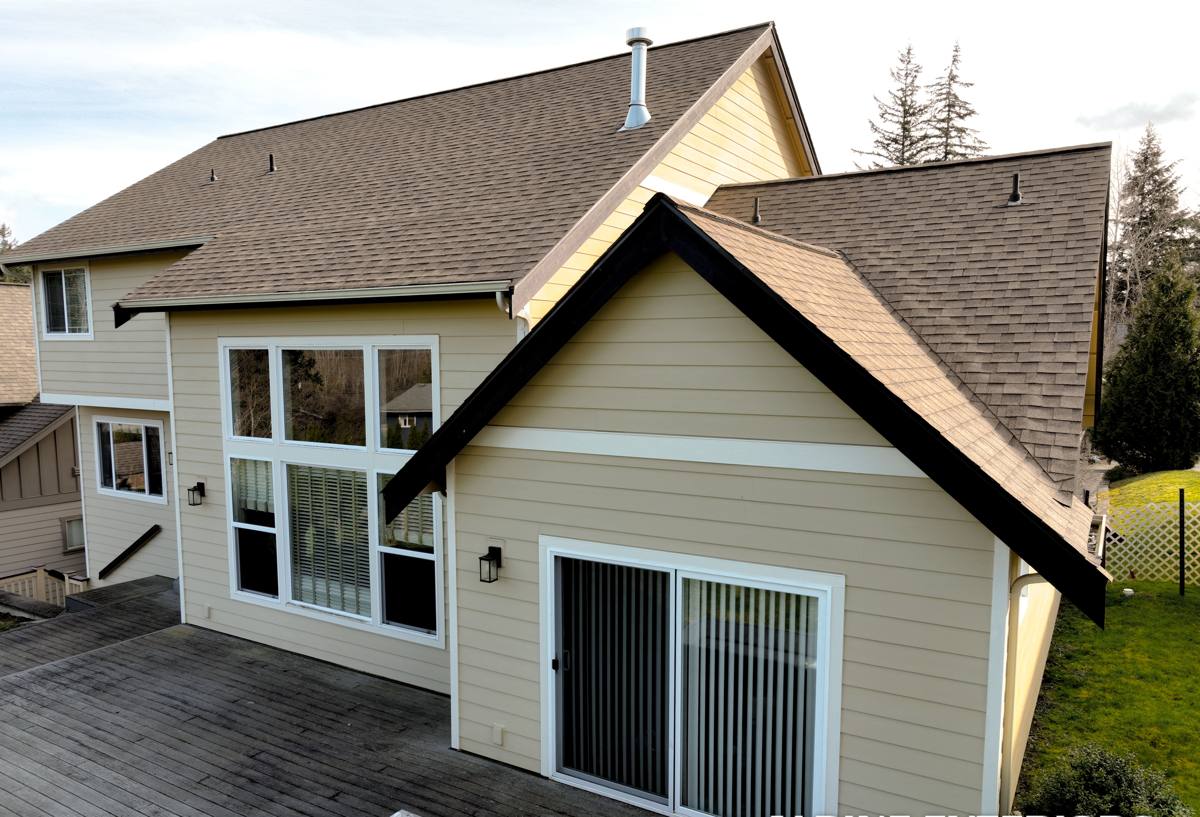
What Waterfront and Peninsula Exposure Does to Windows
Salt Air and Hardware Corrosion
The closer a home sits to open water, the more salt-laden air it takes on, and Lummi Nation's peninsula location puts a lot of homes closer to that exposure than most properties in Ferndale proper. Salt air works on window hardware and fasteners the same way it works on everything else metal outside — pitting hinges, stiffening locks and cranks, and corroding lower-grade screws and flashing years ahead of schedule. A window that would hold up fine set back a few miles inland can show hardware failure much sooner out here if it wasn't specified with that exposure in mind.
Wind-Driven Rain Off the Water
Open water exposure means less windbreak, and wind is what turns rain into a sideways problem instead of a straight-down one. Wind-driven rain gets pushed directly into rough openings, sill pans, and any seam where flashing isn't lapped correctly, which is a harder test than a simple rainfall total suggests. This is the single biggest reason window leaks trace back to installation detail rather than the window unit itself — the water is coming in sideways, and a flashing job built for calmer conditions won't stop it.
A Long Moss and Mildew Season
Peninsula terrain, tree cover in places, and near-constant dampness add up to a moss and mildew season that runs longer here than in drier parts of the county. On windows specifically, it shows up first on sills, trim, and the wood framing around older units, especially on shaded or north-facing walls. Sustained growth holds moisture against wood trim and framing longer than a drier climate would allow, which is exactly the condition that leads to soft sills and rotted framing around an aging window.
Condensation and Temperature Swings
Damp winters and the gap between a heated interior and a cold, wet exterior put real condensation pressure on window glass and frames, and that pressure doesn't ease up much on a waterfront lot with constant humidity in the air. Fogging between panes, water pooling on interior sills, or persistent condensation on the glass usually points to a failed seal rather than something a homeowner is doing wrong — and it tends to show up earlier on properties this close to the water.
What a Correct Window Installation Actually Involves
Flashing and Sequencing
Flashing is what actually keeps a window dry over the long run, and it has to go in a specific order: sill pan first, sloped to drain water back out and away from the rough opening, then side and head flashing lapped over it in the correct sequence so water sheds down and out rather than getting trapped behind the window. Every seam gets sealed with materials rated for sustained moisture exposure, not caulk applied as a stand-in for flashing that was never installed correctly. On a property taking this much direct wind and rain, skipping or rushing any step in that sequence tends to show up as a leak within a season or two, not years down the road.
New Construction vs. Retrofit Installation
A window going into new framing gives us full access to the rough opening and the surrounding wall assembly, which makes it easier to get flashing sequencing exactly right. A retrofit or replacement window going into an existing opening is a different job — it means working around whatever siding, trim, and flashing is already there, assessing whether the existing rough opening and any hidden framing damage need attention before a new window goes in, and making sure the new flashing ties into the existing wall system rather than just covering it up. We tell homeowners which situation they're in before work starts, since it changes both the process and the cost.
Choosing Window Products for This Exposure
We install vinyl and fiberglass window systems built for the Pacific Northwest's wet, mild climate, and we walk homeowners through the real trade-offs rather than pushing a single brand as the only right answer. For a Lummi Nation property specifically, hardware grade and glazing package matter as much as frame material, given how much salt air and moisture these homes handle compared to properties further inland.
| Factor | Vinyl | Fiberglass |
|---|---|---|
| Cost | Generally lower | Generally higher |
| Dimensional stability | Good; some expansion and contraction with temperature swings | More stable across wide temperature ranges |
| Corrosion resistance | Frame itself doesn't corrode; hardware grade still matters | Frame itself doesn't corrode; hardware grade still matters |
| Finish options | Limited to manufacturer color options | Can typically be painted, more color flexibility |
| Best fit | Most standard replacements and budgets | Larger openings or homeowners wanting paintable trim-matched frames |
Whichever frame material a homeowner chooses, we specify corrosion-resistant hardware and a glazing package with low-E coatings suited to this climate — that combination does more for long-term performance on a waterfront property than the brand name on the frame.
Replacement vs. Repair: How We Make the Call
Not every window issue on a Lummi Nation home calls for full replacement. A window with a failed seal but a sound frame and working hardware is often a reasonable repair candidate. A window with rotted framing, corroded-through hardware, or flashing that's been letting water into the wall for a while usually isn't — patching it tends to cost more over time than doing the replacement once, correctly.
| Condition | Repair Usually Makes Sense | Replacement Usually Makes Sense |
|---|---|---|
| Fogged glass, sound frame and hardware | Yes — reglaze or seal replacement | Only if the frame is also compromised |
| Corroded or seized hardware, sound frame | Yes — hardware replacement | Not on its own |
| Soft or rotted sill or frame | Rarely a lasting fix | Yes |
| Recurring leak despite past sealing attempts | Sometimes, if flashing is the actual cause | Yes, if the window unit itself is the source |
| Single-pane or original units nearing end of life | Short-term fix at best | Yes, for real energy and moisture performance |
Signs a Lummi Nation Home Needs Window Attention
- Fogging or trapped moisture between the panes of a double-pane window
- Drafts or cold spots near the frame even with the window fully closed and locked
- Sills or trim that feel soft, look discolored, or show visible rot
- Hardware that's stiff, corroded, or hard to operate compared to when it was new
- Visible gaps or daylight where the frame meets the siding
- Moss or dark staining building up on sills or trim, especially on shaded walls
- Staining or bubbling paint on interior walls below or beside a window
Cost Factors for Window Installation Near the Water
| Factor | What It Affects | Why It Matters Here |
|---|---|---|
| Retrofit vs. new construction install | Labor scope and access to the rough opening | Retrofit work on exposed lots often reveals hidden moisture damage behind the old window |
| Frame material and glazing package | Unit cost and long-term performance | Higher-grade hardware and glazing hold up longer against sustained salt and moisture exposure |
| Number and size of openings | Total material and labor cost | Larger openings and picture windows carry more perimeter to flash correctly |
| Existing framing condition | Repair costs before the new window goes in | Long-term trapped moisture can rot sill and jamb framing behind older windows |
| Site access | Labor time and equipment needs | Waterfront and peninsula lots can have limited access or tighter staging areas |
Exact costs depend on the specific property, its exposure, and the condition of what's already there, which is why we look at the home in person before giving a real number instead of quoting off a generic price sheet.
Why a Local Crew That Works Lummi Nation Matters
A crew that works this stretch of the peninsula regularly understands how salt air, wind-driven rain, and a long moss season behave on real Lummi Nation homes over a full year, not just how a window performs on a spec sheet. That experience shapes decisions on install day: how much lap a sill pan and flashing detail actually need, which hardware grade is worth specifying instead of defaulting to standard, and which openings need extra attention because of how they face the wind and water. Lummi Nation's proximity to open water means its homes see a heavier version of the same challenges the rest of Ferndale deals with, and a crew with hands-on experience here treats that difference seriously instead of installing to a standard built for a calmer, more sheltered site.
Our Process
- An on-site look at the existing windows, checking frame and sill condition, hardware function, seal integrity, and how current flashing ties into the surrounding wall
- An honest read on which windows are reasonable repair candidates and which make more sense to replace, window by window rather than as a blanket recommendation
- A written scope that separates the manufacturer's product warranty from our installation warranty
- Flashing and drainage detailing handled as standard practice on every window, not offered as an upgrade
If you're dealing with drafty, foggy, or hard-to-operate windows on a Lummi Nation property, planning a full replacement, or just want an honest read on what's actually happening around an aging window, we're glad to take a look. Reach out using the form below to schedule a free, no-pressure estimate.