 Ferndale Exterior
 Building a Deck That Actually Holds Up in Bellingham
Bellingham sits close enough to the water that homes here deal with a steady diet of marine air, wind-driven rain, and long stretches of gray, damp weather that can run from October through May. A deck built with generic, one-size-fits-all methods might look fine the day it's finished and start showing problems within a couple of seasons — soft spots near the house, black streaks on the boards, hardware that rusts and stains the wood around it. A deck built correctly for this specific climate is a different project from the start: different fasteners, different flashing details, different spacing, and different material choices.
We build and repair custom decks throughout the Bellingham area as part of our regular service territory out of Ferndale, so this isn't a one-off job for us. It's the majority of what we do in any given month, and the lessons from one deck carry straight into the next.
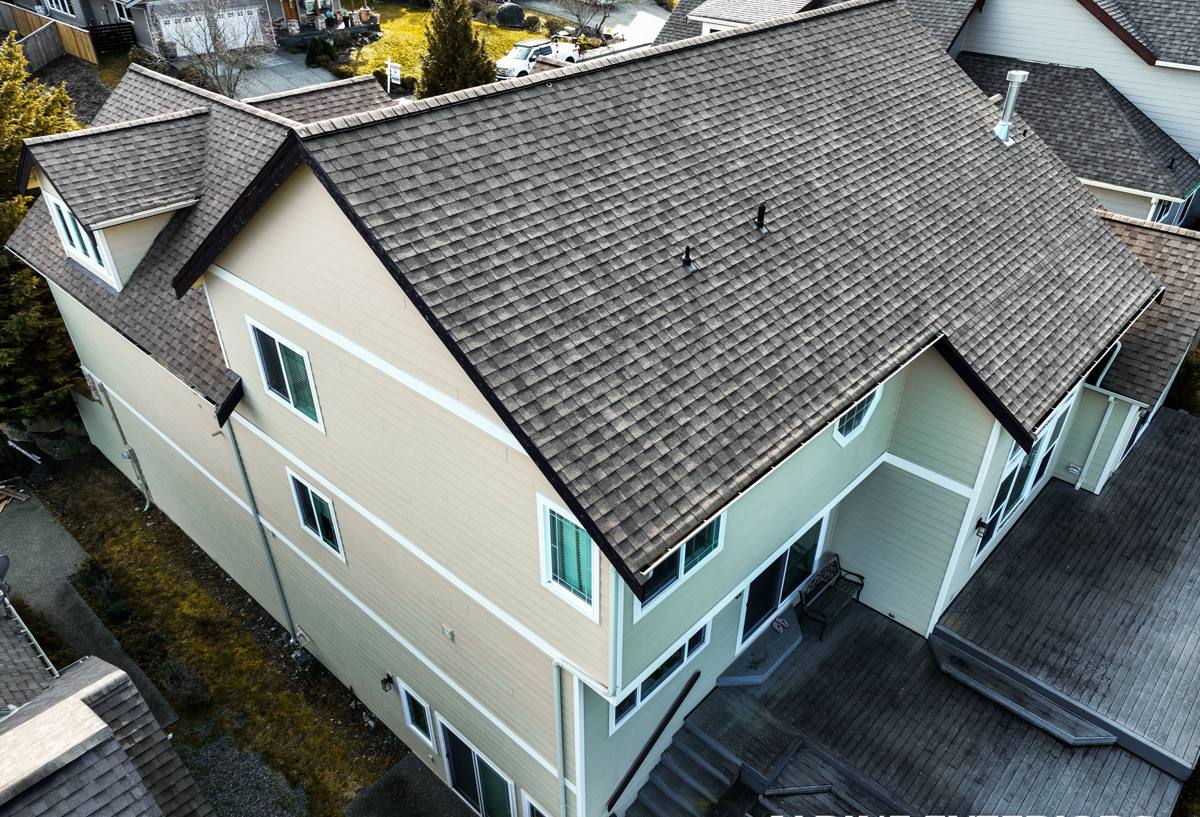
What Whatcom County Weather Does to a Deck Over Time
Salt Air and Metal Fasteners
Proximity to Bellingham Bay and the Salish Sea means a measurable amount of salt in the air, especially on west- and south-facing decks that catch prevailing wind. Standard zinc-coated screws and nails corrode faster in that environment than they would inland. Corroding fasteners don't just look bad — they weaken structural connections and can streak the surrounding wood or composite with rust stains that don't wash out.
Driving Rain and Water Intrusion
Rain here rarely falls straight down. Wind-driven rain gets pushed sideways into ledger boards, stair stringers, and any spot where the deck meets the house. If flashing and gaps aren't detailed correctly at the design stage, water finds its way behind fascia boards and into the ledger connection — which is the single most common point of rot failure on decks in this region.
Moss, Algae, and a Long Damp Season
Whatcom County's moss season is long. Anywhere a deck surface stays shaded and damp for extended periods — under overhangs, near fences, on the north side of a house — moss and algae get a foothold. Beyond looking bad, a mossy deck surface gets slick and dangerous, and moss holds moisture against the board surface longer than open air would, accelerating wood decay underneath.
What a Correctly Built Deck Involves
A deck that's built to last in this climate isn't about using more expensive materials for their own sake — it's about getting a handful of construction details right, every time, regardless of budget tier.
- Ledger board flashing that directs water away from the house wall, with a proper gap or flashing tape between the ledger and siding rather than a direct, sealed-tight connection
- Stainless steel or heavy hot-dip galvanized fasteners and structural hardware, not standard coated screws, especially within a few miles of the water
- Footings sized and set below frost depth per Whatcom County code, with proper drainage around them so they aren't sitting in standing water through the wet months
- Joist spacing tightened up from the bare minimum when composite decking is used, since composite boards can flex more than solid wood between supports
- Airflow underneath the deck — proper clearance from grade and, where the deck is low to the ground, skirting that still allows ventilation rather than sealing the space
- Board gapping calculated for the specific material's expansion and contraction in our wet-to-dry seasonal swing
Skipping any one of these doesn't usually cause an immediate, visible problem. It shows up two, five, or eight years later as soft framing, stained fascia, or a deck surface that's become a maintenance headache instead of the low-effort outdoor space it was supposed to be.
Choosing the Right Decking Material for This Climate
There's no universally "best" decking material — there's a best fit for a given budget, sun exposure, and how much upkeep a homeowner actually wants to do. Here's how the common options compare specifically for a wet, moss-prone environment like Bellingham's:
| Material | Moisture Performance | Moss/Algae Resistance | Maintenance | Typical Lifespan |
|---|---|---|---|---|
| Pressure-treated wood | Good, if sealed and re-sealed regularly | Moderate — needs periodic cleaning | Annual cleaning, re-sealing every 2-3 years | 15-20 years with upkeep |
| Cedar | Naturally decent, but softer than PT | Moderate — same cleaning needs | Sealing/staining every 1-3 years | 15-20 years with upkeep |
| Composite (capped) | Excellent — doesn't absorb water | Better, but still needs periodic washing | Occasional washing, no sealing | 25-30+ years |
| Composite (uncapped) | Good but more prone to surface wear over time | Moderate | Washing plus more frequent surface care | 20-25 years |
We'll talk through this honestly during an estimate rather than steering everyone toward the highest-margin product. A cedar deck that's cared for looks great and holds up fine here. A capped composite deck costs more up front but is the right call for anyone who wants to spend their weekends doing something other than deck maintenance, or for a shaded, moss-prone spot where a low-maintenance surface makes a real difference.
Our Process for a Bellingham Deck Project
1. Site Evaluation
We look at sun exposure, drainage, existing grade, and how the deck ties into the house before we talk materials or design. A north-facing, tree-shaded lot near Bellingham needs a different plan than a sunny, open backyard.
2. Design and Material Selection
We walk through layout, railing style, and decking material options with real trade-offs explained — not just a catalog handoff. This is where budget, maintenance tolerance, and how the space will actually be used come together.
3. Permitting
Deck projects above certain heights or attached to the structure typically require a permit through the applicable jurisdiction. We handle that process as part of the build so it isn't left for the homeowner to sort out.
4. Construction
Footings, framing, ledger flashing, decking, and railing — built in that order, with inspections at the appropriate stages where required.
5. Final Walkthrough
We go over the finished deck together, including basic care guidance specific to the material installed, so there are no surprises about what upkeep looks like going forward.
Keeping a Bellingham Deck in Good Shape Long-Term
Even a correctly built deck needs some seasonal attention in this climate. A short annual routine goes a long way:
- Sweep debris off the deck surface regularly, especially in fall when leaves and needles trap moisture against the boards
- Wash the surface at least once a year to clear early moss and algae growth before it gets established
- Check and clear gaps between boards so water and debris don't build up and hold moisture
- Inspect ledger flashing and any visible fasteners once a year for rust staining or gaps that have opened up
- Reseal wood decking on the schedule appropriate to the product — don't wait until it's visibly gray and dry
- Confirm downspouts and grading near the deck are still directing water away rather than pooling underneath
Why It Matters to Hire a Crew That Already Works This Area
Deck-building fundamentals are the same everywhere, but the details that separate a deck that lasts 25 years from one that needs rot repair by year seven are regional. A crew that builds mostly in drier inland climates may not default to stainless fasteners, may not think twice about ledger flashing gaps, and may not factor moss exposure into board selection — because in their usual work environment, those details matter less. In Whatcom County, they matter a lot.
We're based in Ferndale and do this work throughout Bellingham and the surrounding area, so these aren't theoretical concerns for us — they're the standard details on every deck we build, regardless of size or budget.
What Affects Deck Project Cost
| Factor | Why It Matters |
|---|---|
| Size and footprint | More square footage means more footings, framing, and decking material |
| Height off grade | Taller decks need more substantial framing, stairs, and railing, and often more permitting scrutiny |
| Material choice | Pressure-treated, cedar, and composite decking span a wide price range per square foot |
| Site access and grading | Sloped or hard-to-access lots add labor time for footings and material staging |
| Railing and stair complexity | Custom railing, multiple stair runs, or built-in features add both material and labor |
| Existing deck removal | Tearing out and hauling away an old deck adds cost before the new build even starts |
Broad ranges vary widely based on these factors, which is why we'd rather walk the site and give a real number than quote a ballpark that doesn't reflect the actual project.
Get a Free, No-Pressure Estimate
If you're planning a new deck or replacing one that's showing its age, we're happy to come take a look, talk through material options honestly, and put together a clear estimate — no pressure, no obligation. Use the form below to get started.