 Ferndale Exterior
 Building Decks for Blaine's Coastal Conditions
Blaine sits close enough to the water that salt air is part of daily life for any deck out there — it works its way into fasteners, finishes, and end grain in ways a deck twenty miles inland never has to deal with. Add in the driving rain that comes off Boundary Bay and the Strait of Georgia through the fall and winter, plus a moss season that can run five or six months in a shaded yard, and you've got a short list of conditions that will find every weak point in a deck within a couple of years if the build didn't account for them from the start.
We build and repair decks throughout Ferndale and out to Blaine, and the difference between a deck that lasts fifteen-plus years and one that's rotting at the ledger board by year six almost always comes down to decisions made before the first board went down — fastener choice, flashing detail, air gap under the decking, and how water is actually meant to leave the structure. This page walks through what that looks like for a Blaine property specifically.
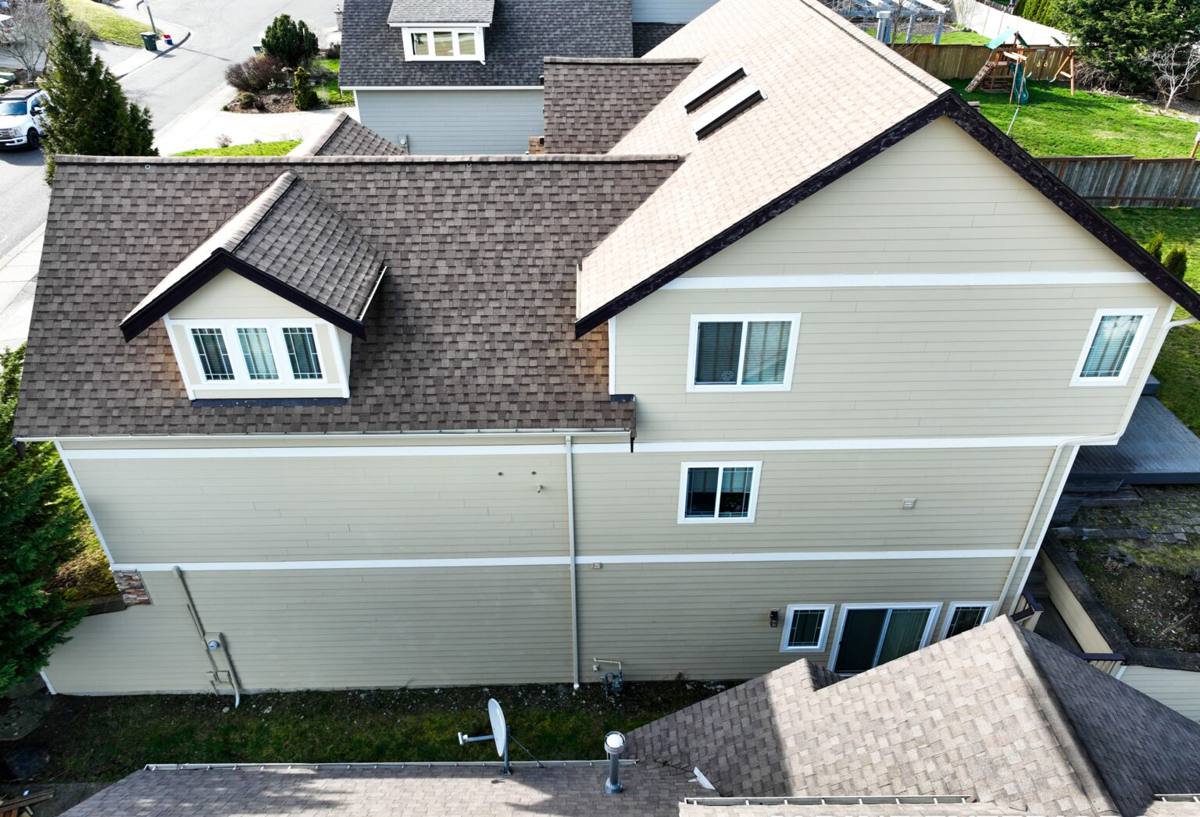
What Salt Air and Coastal Moisture Actually Do to a Deck
Salt-laden air is corrosive to metal, full stop. Standard hot-dip galvanized fasteners and hardware that would be perfectly fine on a deck in a drier inland location can start showing rust streaks and pitting within a few seasons this close to the water. Once a fastener starts corroding, it loses holding strength long before it looks obviously bad — which is why we don't treat fastener spec as a minor line item.
Where the damage shows up first
- Fastener heads and joist hangers — visible rust streaking on the decking or rim joist is usually the first sign
- Ledger board connections — the point where the deck attaches to the house, and the hardest spot to inspect without pulling boards
- Post bases and any concrete-to-wood contact points, where trapped moisture and salt combine
- Railing hardware, especially on any metal or cable railing systems
None of this means a deck in Blaine can't last — it means the hardware and connection details have to be chosen for the environment, not just pulled off a generic materials list.
Driving Rain and Drainage: The Part Most Decks Get Wrong
Whatcom County rain isn't gentle and vertical most of the year — it comes sideways off the water with real force, which means water gets driven into gaps and seams that would stay dry in a calmer climate. A deck built without deliberate drainage planning will hold water in places you can't see: under the decking boards, behind ledger flashing, and inside post bases.
A correctly built deck manages water on purpose, at every layer:
| Deck Layer | What It Needs to Do | Common Failure Point |
|---|---|---|
| Ledger board | Shed water away from the house band joist with proper flashing | Missing or improperly lapped flashing lets water into the rim joist |
| Decking boards | Allow water to pass through and off, not pool | Boards installed too tight, no gap for expansion or drainage |
| Framing | Stay ventilated underneath so wood can dry between rain events | Low clearance to grade traps humid air under the deck |
| Fasteners & hardware | Resist corrosion from salt air and standing moisture | Standard galvanized hardware corrodes faster near the coast |
| Post bases | Keep wood off wet concrete and standing water | Posts set directly in or on wet concrete wick moisture upward |
Get any one of these wrong and the rest of the deck can be built perfectly and still fail early. This is the part of the job that doesn't show up in photos but determines whether the deck is still solid in year twelve.
Moss, Algae, and the Coastal Shade Problem
A long moss season is one of the more underrated hazards to a deck's surface. Moss and algae hold moisture against the wood or composite surface, and on stairs and ramps they turn a deck into a slip hazard fast — this is a real safety issue, not just a maintenance annoyance. Decks in shaded yards, under mature trees, or on the north side of a house are the most exposed, and Blaine has plenty of properties with tree cover and consistent shade that never gets a proper dry-out window.
What actually reduces moss buildup
- Board spacing and gap width sized to let the surface dry between rain events, not just look tight and clean
- Surface material chosen with the site's shade level in mind, not a one-size-fits-all pick
- Grading and drainage around the deck footprint so water isn't sitting against the structure
- A realistic cleaning interval the homeowner is actually willing to keep up with
We'll tell you honestly if a spot on the property is going to be a high-moss zone no matter what material goes down — that's a site condition, not a product failure, and it's better to plan for it than pretend it away.
Decking Material Choices for a Blaine Property
There's no single "best" decking material for coastal Whatcom County — the right call depends on budget, how much upkeep you want to do, and how shaded or exposed the site is. Here's how the common options actually perform in these conditions:
| Material | Coastal/Moisture Behavior | Maintenance | Trade-offs |
|---|---|---|---|
| Pressure-treated wood | Good if fasteners and flashing are done right; still needs regular sealing | Annual cleaning, re-sealing every 2-3 years | Lowest upfront cost, most upkeep over time |
| Cedar | Naturally moisture- and insect-resistant, but softer surface | Regular sealing to hold color and resist weathering | Better appearance, higher cost than treated wood, still needs care |
| Composite decking | Doesn't rot or absorb moisture the way wood does | Occasional washing, no sealing | Higher upfront cost, can still grow surface algae in heavy shade without cleaning |
| PVC decking | Fully moisture-resistant, handles standing water well | Lowest maintenance of the group | Highest material cost, more limited color range |
We'll walk through this table against your actual site — how much sun the deck gets, what your budget range looks like, and how much maintenance you realistically want to do — rather than defaulting to whatever's easiest for us to install.
Our Deck Building Process
Every deck we build in Blaine or elsewhere in the Ferndale area goes through the same core steps, with the coastal-specific details built in rather than bolted on afterward.
- Site assessment. We look at sun exposure, tree cover, drainage patterns, soil conditions, and how the deck ties into the house before quoting anything.
- Design and permitting. Deck size, height, and railing requirements are checked against Whatcom County and local code before we finalize plans.
- Ledger and flashing detail. This connection to the house gets built with proper flashing and fastener spec first — it's the single most important structural and moisture-control point on the whole deck.
- Framing. Joists, beams, and post bases are set with adequate ground clearance and corrosion-resistant hardware throughout.
- Decking installation. Board spacing is set for proper drainage and airflow, not just visual tightness.
- Railing and stairs. Built to code height and spacing requirements, with hardware matched to the coastal environment.
- Final walkthrough. We go over the finished deck with you, including a realistic maintenance schedule for your specific site conditions.
Repair, Rebuild, or Replace?
Not every deck in Blaine needs to be torn out. If the framing is sound and the problem is isolated — a few soft boards, corroded hardware, a railing that's come loose — targeted repair is usually the right call. Where we see full replacement make more sense is when the ledger connection has been compromised by water intrusion, when framing shows structural rot rather than surface weathering, or when a deck was undersized or under-built for the loads it's carrying.
Signs it's worth having a deck looked at
- Soft or spongy spots underfoot, especially near the house or stairs
- Visible rust streaking around fasteners or hardware
- Gaps or separation where the deck meets the house
- Persistent moss or algae that comes back within weeks of cleaning
- Railings or stair stringers that feel loose or flex under weight
- Standing water anywhere on the deck surface after rain
If you're not sure which category your deck falls into, that's exactly what a walkthrough is for — we'd rather tell you a repair will hold for years than sell you a full rebuild you don't need.
Why Local Experience Matters for This Job
A deck builder who mostly works drier, inland jobs can still build a structurally sound deck — but the details that keep a Blaine deck healthy for the long run come from having actually dealt with what salt air and driving coastal rain do to fasteners, flashing, and wood over a few winters. We work this area regularly, which means we're not guessing at fastener corrosion rates or how much airflow a given site needs under the decking — we've seen what holds up here and what doesn't.
That local pattern recognition is worth more than it sounds like on paper. It's the difference between a crew that follows a generic build spec and one that adjusts the spec for a Boundary Bay-facing lot versus a sheltered, tree-shaded yard a few blocks inland.
Get a Free Estimate
If you're planning a new deck in Blaine, or you've got an existing one showing signs of wear from the salt air, rain, or moss, we're happy to come take a look and give you an honest, no-pressure estimate. Use the form below to get started.