 Ferndale Exterior
 Window Installation Built for Everson's Weather
Everson sits in a part of Whatcom County where windows work harder than they do almost anywhere else in the state. Between long stretches of driving rain, damp air that never fully clears, and a moss season that seems to run most of the year, the seals, frames, and flashing around a window take a steady beating. A window that would last decades in a dry climate can start failing in half that time here if it wasn't installed correctly the first time.
This page is about one job done right: replacing or installing windows on Everson homes in a way that actually holds up to the local climate — not just what looks good on install day.
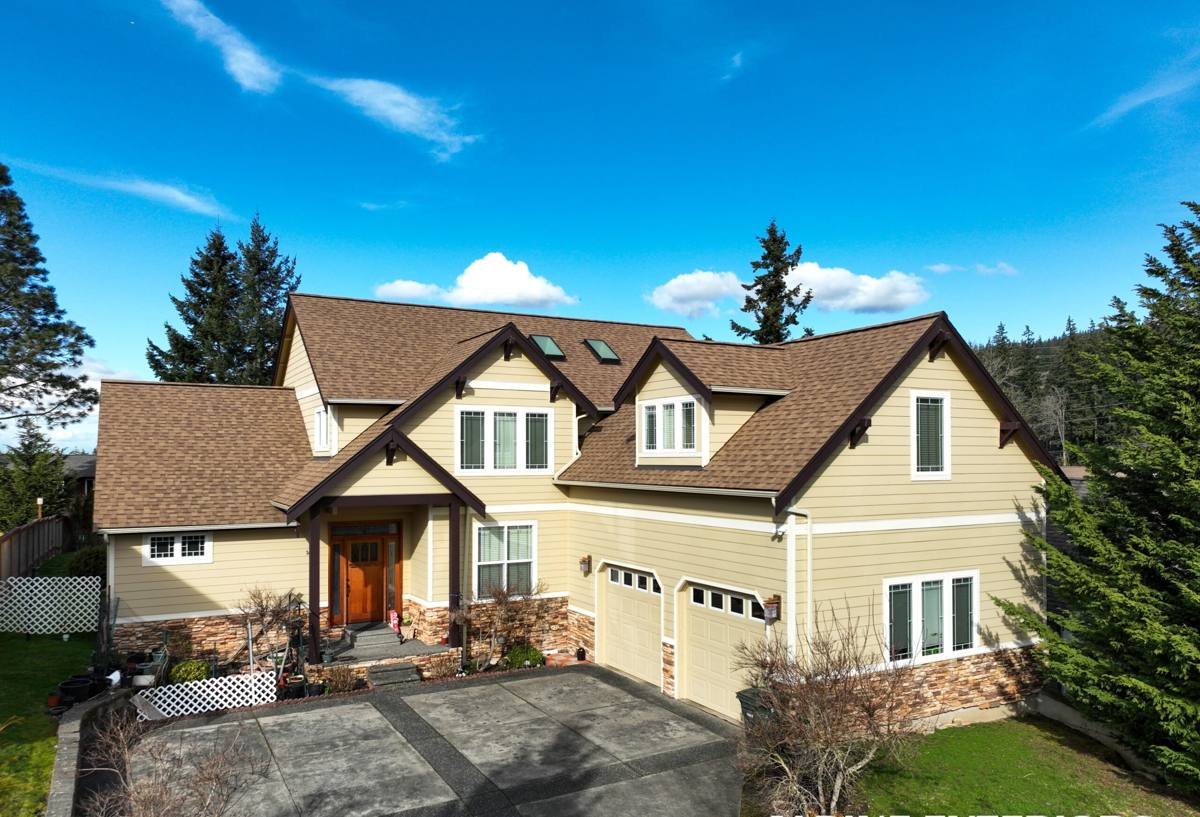
What Whatcom County Weather Does to Windows Over Time
Most window failures we see in this area aren't because the window itself was bad. They're because water found a way in around the frame, or the seal between the window and the wall was never built to shed water the way this climate demands.
Moisture Intrusion
Driving rain doesn't just fall straight down here — wind pushes it sideways into siding and window gaps. If the flashing and weather barrier around a window aren't layered correctly (upper layers overlapping lower layers, shingle-style), water works its way behind the trim and into the wall framing. You often don't see this until there's already rot or a stain on the interior sill.
Moss and Organic Buildup
Shaded, damp window sills and lower sashes collect moss and algae just like roofs and siding do. Left alone, that buildup holds moisture against wood trim and finishes, which accelerates rot and paint failure around the frame.
Salt Air and Corrosion
Homes closer to the water deal with salt-laden air that speeds up corrosion on hardware, screws, and lower-grade metal components. Over years, this shows up as stiff locks, pitted hinges, and hardware that no longer seats tight — which then lets more moisture in.
Temperature Swings and Condensation
Cool, humid nights followed by daytime warming lead to condensation on and around windows, especially older single-pane or poorly sealed units. Persistent condensation between the glass or on interior trim is usually a sign the seal has already broken down.
Signs an Everson Home's Windows Need Attention
- Fogging or moisture trapped between panes of a double-pane window
- Soft, discolored, or spongy wood trim around the window frame
- Drafts you can feel near the window even when it's closed and latched
- Visible gaps between the window frame and siding or trim
- Moss or dark staining building up on the sill or lower frame
- Windows that are hard to open, close, or lock properly
- A noticeable jump in heating costs without another clear cause
Any one of these on its own isn't necessarily an emergency, but a few of them together usually mean the current window and its seal are past their useful life.
What Correct Installation Actually Involves
Window installation looks simple from the outside — take the old one out, put the new one in. The part that actually determines whether it lasts is everything you don't see once the trim goes back on.
Removal Without Collateral Damage
Old windows and their surrounding trim have to come out carefully so we can inspect the rough opening underneath. This is where hidden rot or old moisture damage usually shows up, and it needs to be dealt with before a new window ever goes in — not covered over.
Flashing and Water Management
This is the step that matters most for a climate like Whatcom County's. Proper installation uses flashing tape and a weather-resistant barrier layered so any water that gets behind the siding is directed back out, never trapped against the framing. This is the difference between a window that stays dry for 20+ years and one that causes hidden rot in five.
Air Sealing and Insulation
Gaps around the window frame get sealed with the right materials — not just caulk on the surface, but proper backer rod and sealant, and insulation in the gap between the window frame and the rough opening. Done wrong, this either leaves drafts or, just as bad, traps moisture with no way to dry out.
Level, Plumb, and Square
A window that isn't installed perfectly level and square will bind, won't seal correctly against its own weatherstripping, and will wear out its hardware faster. This takes patience and shimming, not guesswork.
Finish Work
Interior and exterior trim, caulking, and touch-up paint or finish are the last step — and the first thing anyone notices if it's done sloppily.
Choosing Window Materials for This Climate
There's no single "best" window material for every home — it depends on your home's style, budget, and how much upkeep you want to take on. Here's how the common options actually perform in Whatcom County conditions.
| Material | Moisture Resistance | Maintenance | Typical Lifespan |
|---|---|---|---|
| Vinyl | Very good — won't rot or corrode | Low — occasional cleaning | 20–30 years |
| Fiberglass | Excellent — very stable in wet/dry cycles | Low | 30+ years |
| Aluminum | Good, but prone to condensation without thermal breaks | Moderate — watch for corrosion near salt air | 20–30 years |
| Wood | Poor without diligent upkeep | High — regular painting/sealing required | Varies widely with maintenance |
| Wood-Clad | Good on exterior, wood interior still needs care | Moderate | 25–30+ years |
For most Everson homes, we steer clients toward vinyl or fiberglass for the exterior-facing performance — not because solid wood windows are a bad product, but because the maintenance burden of keeping exposed wood sealed against this much year-round moisture is a real, ongoing commitment most homeowners don't want to sign up for. If you want the look of wood, a wood-clad or wood-interior option gives you that without leaving raw wood exposed to the weather.
Our Window Installation Process
- On-site assessment — we look at existing window condition, framing, and any signs of past moisture issues before quoting anything.
- Product selection — we walk through material, glass, and style options suited to your home and budget, without pushing a single brand as the only answer.
- Careful removal — old windows and trim come out with attention to what's underneath, not just speed.
- Rough opening repair — any rot, damaged sheathing, or old flashing failures get fixed before the new window goes in.
- Flashing and weather barrier installation — layered correctly for this region's wind-driven rain.
- Window installation — set level, plumb, and square, shimmed and fastened to manufacturer spec.
- Insulation and air sealing — gap filled correctly, no compressed insulation, no gaps left open.
- Interior and exterior finish work — trim, caulk, and paint or stain matched to the surrounding home.
- Final walkthrough — we test operation, locks, and seals with you before we consider the job done.
What Affects the Cost of a Window Installation
| Factor | Why It Matters |
|---|---|
| Number of windows | Per-window cost typically drops on larger jobs due to shared setup and labor |
| Window size and type | Custom shapes, large picture windows, or specialty grilles cost more than standard sizes |
| Material | Vinyl is generally the most budget-friendly; fiberglass and wood-clad cost more upfront |
| Condition of the rough opening | Hidden rot or old flashing failures add repair time and cost, but skipping this repair costs far more later |
| Access and home height | Second-story or hard-to-reach windows take longer and may need additional equipment |
| Trim and finish work | Matching existing trim profiles or custom interior finish adds labor |
We give straightforward, itemized estimates so you know what you're paying for and why — no vague lump-sum numbers that hide what's actually being done.
Why Hire a Crew That Already Works in Everson
A window installer who mostly works in drier parts of the state can do fine work and still get flashing details wrong for a climate like this one — because it's never been tested against this much sustained rain. Crews who regularly work Everson and the surrounding Whatcom County area have already seen what happens when flashing is done wrong here: the callbacks, the rot, the mold behind trim that shows up two winters later.
That experience shapes how we approach every install — where we add extra flashing tape, how we detail sills, and which products we trust to hold up long-term in this specific mix of rain, humidity, and moss. It's not about brand loyalty; it's about what we've seen actually perform in this climate over years, not just on install day.
After Installation: Keeping New Windows Performing
A correctly installed window still benefits from basic upkeep in this climate:
- Rinse sills and tracks periodically to clear moss, pollen, and debris before it builds up
- Check exterior caulking once a year for cracking or gaps, especially after a hard winter
- Keep gutters and downspouts clear so runoff isn't sheeting down over window heads
- Operate locks and hardware occasionally in winter to prevent them from seizing up
- Watch for condensation between panes — it's an early sign a seal has failed, not just a cosmetic issue
None of this is complicated, but skipping it is how a well-installed window ages faster than it should.
If your Everson home has windows showing their age — or you're planning ahead before another wet winter — we're happy to take a look and give you a straightforward, no-pressure estimate. Use the form below to get started.