 Ferndale Exterior
 Composite Decking Built for Lynden's Weather
Lynden sits inland from Bellingham Bay in the flat, fertile heart of Whatcom County, and that location shapes what a deck has to survive here. You won't get the direct salt spray that homes closer to the water deal with, but Lynden still sits inside a marine-influenced climate that dumps a long, wet fall-through-spring season on every exterior surface, followed by humid summers with plenty of shade from mature trees and farm windbreaks. That combination — driving rain, slow-drying humidity, and shaded ground — is exactly the setup that rots wood decking from the inside and grows moss in every low spot. Composite decking, installed correctly, is one of the more reliable answers to that specific set of problems, which is why it's become the go-to choice for homeowners replacing tired wood decks in this area.
This page is about composite decking specifically for Lynden properties — what the local climate demands, what a correct installation actually involves, and how our process works when we build or replace a deck out here.
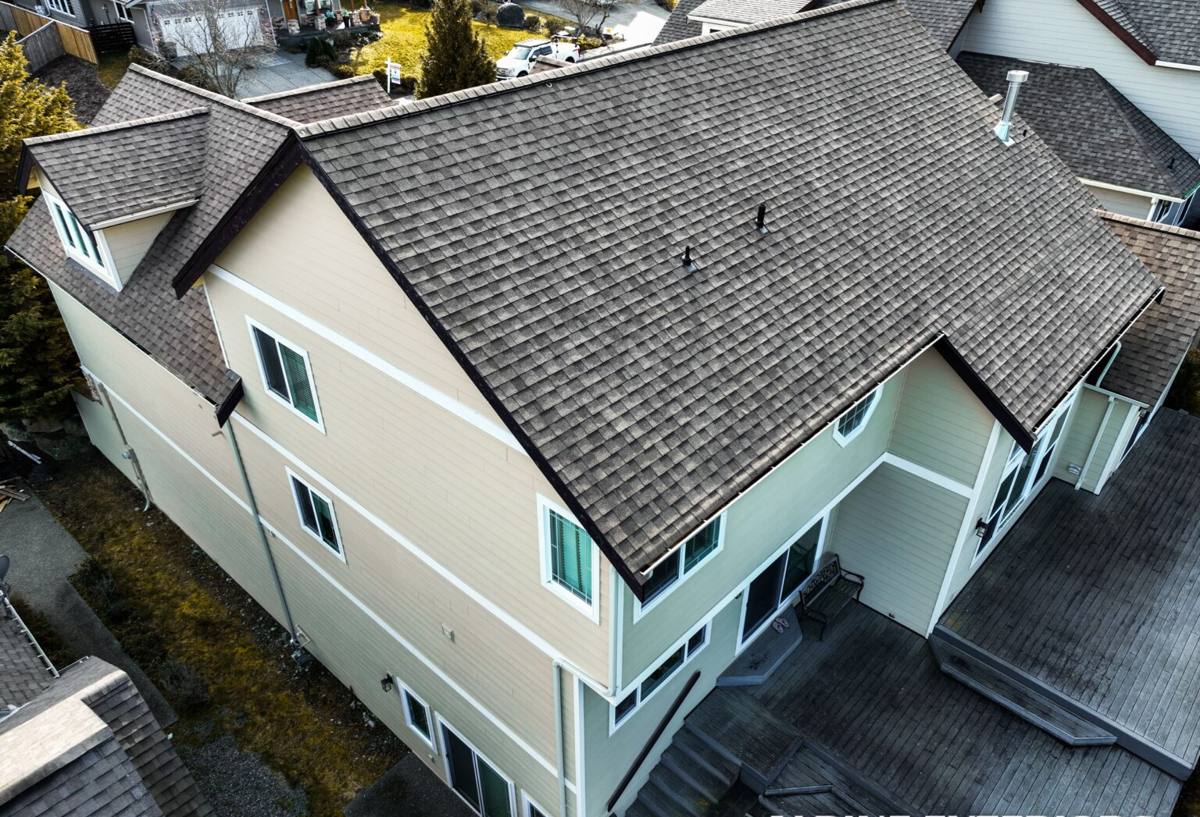
What Whatcom County Weather Does to a Deck
Every deck material has a weak point, and in this part of Washington, water is the one that finds it. A few things happen consistently to decks in and around Lynden:
- Moss and algae take hold fast. Shaded yards, tree cover, and long stretches of overcast, damp weather give moss everything it needs to establish on horizontal surfaces — especially north-facing decks or ones tucked under eaves and trees.
- Driving rain gets under boards, not just on top of them. Wind-driven rain during fall and winter storms pushes moisture sideways into gaps, fastener holes, and end grain, which is where wood decking actually starts to fail.
- Freeze-thaw cycling stresses joints. Whatcom County doesn't get brutal winters, but it gets enough freeze-thaw swings each year to work water into small cracks and gradually widen them — a slow process that shows up as splitting, cupping, or popped fasteners over a few seasons.
- Slow drying times extend every problem. A deck in Phoenix dries out between rains. A deck in Lynden often doesn't fully dry for weeks at a stretch during the wet season, which means any trapped moisture has a long time to do damage.
None of this means wood decking can't work here — it can, with diligent yearly maintenance. But composite decking is engineered specifically to shrug off most of these issues without depending on the homeowner staying on top of a maintenance schedule every single year.
Why Composite Handles This Better Than Wood
Modern composite decking is a blend of wood fiber and recycled plastic (capped composite adds a polymer shell over that core). That construction means it doesn't absorb water the way solid wood does, it won't splinter or cup from repeated wetting and drying, and it doesn't need annual staining or sealing to keep moisture out. It's not immune to moss — anything sitting outside under Whatcom County skies will grow some organic film eventually — but composite doesn't feed mold and rot the way wood fiber does, and a simple wash keeps it looking right.
Composite vs. Wood vs. PVC: An Honest Comparison
| Factor | Pressure-Treated Wood | Composite | PVC (Cellular Vinyl) |
|---|---|---|---|
| Moisture resistance | Absorbs water; needs sealing yearly | Resists absorption; low maintenance | Fully waterproof |
| Moss/algae resistance | Prone to growth, especially in shade | Resistant but not immune; washes off easily | Very resistant; smooth surface sheds moss |
| Upfront cost | Lowest | Mid-range | Highest |
| Maintenance | Annual cleaning/sealing/staining | Occasional washing | Minimal |
| Feel underfoot | Natural wood texture | Wood-look grain, warmer than PVC | Plastic feel, can be slick when wet |
| Typical lifespan | 10–15 years with upkeep | 25–30+ years | 25–30+ years |
We install both composite and wood, and for some budgets or aesthetics wood is still the right call. But for Lynden homeowners who are tired of re-staining a deck every spring, or who inherited a wood deck that's already showing rot at the joist connections, composite is usually the more honest long-term answer — good moisture performance without the premium price and glossier look of full PVC.
What a Correct Composite Installation Actually Involves
Composite boards are only as good as what's underneath and around them. A lot of deck failures we get called out to fix in this area aren't the decking's fault — they're framing or drainage mistakes made during a rushed install. A correct job includes:
Framing and Structure
- Joist spacing matched to the specific composite product's span rating — composite generally needs tighter joist spacing than wood, and manufacturers publish exact limits that get ignored more often than you'd think.
- Pressure-treated or engineered framing lumber, since the substructure is still wood even when the surface isn't.
- Proper ledger board flashing where the deck attaches to the house — this is the single most common point where water gets behind siding and causes hidden rot, and it matters even more under Whatcom County's rain load.
Drainage and Airflow
- Grading and gapping that lets water actually leave the deck surface instead of pooling under it.
- Ventilation underneath low-to-grade decks, since trapped moist air under a deck is exactly what encourages mold and accelerates joist rot.
- Flashing tape or joist protection on framing members exposed to standing water, extending the life of the structure the composite boards are riding on.
Fastening and Finish
- Hidden fastener systems (clips, not face screws) on most composite lines, for a cleaner look and fewer penetration points for water.
- Manufacturer-specified gapping between boards to allow for thermal expansion — composite moves with temperature more than people expect, and skipping this step causes buckling.
- Proper picture-framing and edge treatment so cut ends — the most vulnerable part of any composite board — are capped or trimmed correctly.
Our Process for a Lynden Deck Project
- On-site assessment. We look at the existing deck or bare site, note drainage patterns, shade exposure, and how the structure ties into the house, since that framing work is where most long-term problems start.
- Material and layout discussion. We go over composite board options, color and grain choices, railing systems, and where a picture-frame border or stair detail makes sense for the space.
- Written estimate. Clear scope, materials, and price before anything is scheduled — no surprise change orders for things we should have caught during the walkthrough.
- Demo and framing (if needed). Old decking and any compromised framing come out, and we rebuild the structure to current span and flashing standards before a single composite board goes down.
- Installation. Boards, hidden fasteners, edge treatments, and railings go in per manufacturer spec, with attention to gapping and drainage the whole way through.
- Final walkthrough and cleanup. We walk the finished deck with the homeowner, confirm everything meets expectations, and clear the site.
Choosing the Right Composite Board
Composite decking isn't one product — it spans a range of price points and construction types, and the right pick depends on budget, sun/shade exposure, and how the deck will be used.
| Board Type | What It Is | Best Fit For |
|---|---|---|
| Uncapped composite | Wood fiber/plastic blend, no protective shell | Budget-conscious projects, covered or low-traffic decks |
| Capped composite | Composite core with a polymer wear layer | Most Lynden homes — best balance of cost, moisture resistance, and appearance |
| Capped composite, premium lines | Enhanced fade and stain resistance, deeper wood-grain texture | Full-sun exposure, higher-end finish preferences |
For most projects out here, capped composite is the sweet spot: it handles the wet season without the maintenance burden of uncapped boards, and it costs less than premium PVC decking while still looking good for decades.
Maintenance: What Lynden Decks Actually Need
Composite is low-maintenance, not no-maintenance. In a climate with this much moss pressure, a little seasonal attention goes a long way:
- Sweep leaves and debris regularly, especially in fall — trapped organic matter is what feeds moss and algae growth.
- Wash the deck once or twice a year with mild soap and water (or a composite-safe cleaner) and a soft-bristle brush, focusing on shaded or north-facing sections where moss tends to start.
- Keep gutters and downspouts clear so runoff isn't dumping directly onto or under the deck.
- Check railing connections and stair fasteners annually — hardware, not the decking itself, is usually the first thing to loosen.
- Trim back overhanging branches where possible to cut down on shade and debris buildup.
That's it. No annual staining, no sealing, no sanding — just enough seasonal upkeep to keep moss from getting a foothold.
Why Hire a Crew That Already Works Lynden
Deck-building rules that work in a drier climate don't automatically transfer here. Joist spacing, ledger flashing, and drainage details that pass inspection in a low-rainfall region can leave a Lynden deck rotting from underneath within a few years, because the volume and duration of moisture this area sees is genuinely different. A crew that regularly works Whatcom County knows the local building department's expectations, understands how our wet season stresses a structure, and has already seen what happens when framing or flashing gets shortcut on a deck exposed to this much rain and shade. That local track record is worth more than a lower bid from a crew unfamiliar with the area.
If you're planning a new composite deck or replacing a wood deck that's finally lost the battle with rot and moss, we're happy to take a look and put together a straightforward, no-pressure estimate. Use the form below to get started.