 Ferndale Exterior
 Why Marietta Roofs Take a Different Kind of Beating
Marietta sits close enough to Bellingham Bay and the Strait of Georgia that salt air is a real factor in how a roof ages here, not just a coastal talking point. Metal fasteners corrode faster, exposed nail heads rust and stain shingle fields, and any raw or unsealed metal flashing starts showing pinholes years before it would inland. Add in Whatcom County's long, wet fall-through-spring stretch — driving rain that comes in sideways off the water more often than it falls straight down — and you get a roof that's under constant pressure to shed water from angles a lot of installation details were never built to handle.
Then there's moss. The combination of shade from mature trees, persistent moisture, and mild temperatures gives moss a genuinely long growing season in this part of Washington. Left alone, it doesn't just look bad — it holds water against the roofing material, works itself under shingle tabs and around fasteners, and slowly lifts edges that were never meant to be lifted. A roof repair strategy for a Marietta home has to account for all three of these things at once: corrosion resistance, wind-driven rain detailing, and a real moss-control plan, not just a patch over the spot that's currently dripping.
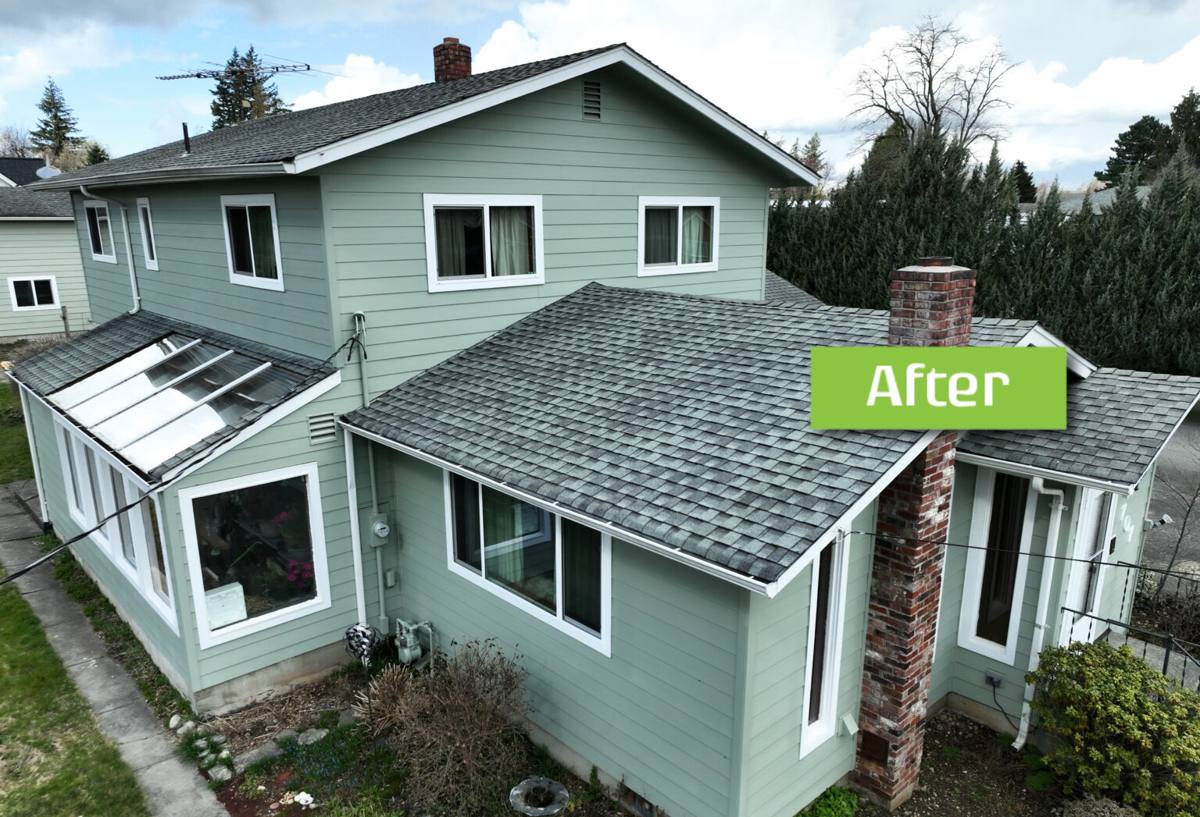
The Most Common Roof Repair Calls We See in This Area
Most repair calls in and around Marietta fall into a handful of recurring categories. Knowing which one you're dealing with helps set expectations before we even get on the roof.
Moss and Organic Growth Damage
Moss buildup along ridges, in valleys, and on the shaded north- and west-facing slopes is probably the single most common issue we're called out for. By the time it's visible from the ground, it's often already lifted shingle edges or worked into the granule surface enough to cause localized wear.
Flashing and Penetration Leaks
Chimneys, plumbing vents, skylights, and any place two roof planes meet are where leaks actually start, far more often than in the open field of shingles. Salt-air corrosion accelerates the failure of step flashing, counter-flashing, and vent boots that weren't installed with corrosion-resistant materials or proper laps to begin with.
Valley and Eave Leaks from Wind-Driven Rain
When rain comes in at an angle instead of falling straight down, water can get pushed uphill under shingle edges in valleys and along eaves — especially if the underlayment detail there was minimal to begin with. This shows up as staining on interior ceilings near exterior walls, often well after the storm that caused it.
Nail Pops, Blow-Offs, and Wind Damage
Whatcom County gets its share of wind events off the water. Loose or missing shingles, exposed nail heads, and lifted ridge caps are common after a hard blow and are worth addressing quickly — a single missing shingle is a small repair; the same spot left open through another storm can turn into sheathing damage.
Gutter and Drainage Backups
Clogged gutters don't just overflow — they back water up under the first course of shingles and behind fascia boards, which is a slow, quiet way to rot a roof edge over a couple of wet seasons.
What a Correct Roof Repair Actually Involves
A repair that actually holds up in this climate is more than caulk and a patch. Caulk and roofing cement have their place, but used as a primary fix instead of a proper flashing or shingle detail, they fail within a season or two — especially with the UV exposure and moisture cycling we get here.
A correct repair means:
- Removing enough surrounding material to actually see the source of the leak, not just the spot where water showed up inside
- Replacing corroded flashing with new material rated for coastal exposure, not just re-sealing what's already failing
- Matching shingle color and profile as closely as possible so the repair doesn't stand out and age at a different rate than the rest of the roof
- Re-establishing proper shingle laps and fastener placement, not just gluing a patch over the gap
- Checking the underlayment and decking underneath before closing the repair back up — a leak that's been active for a while can soften sheathing that needs to be addressed, not covered
Skipping any of these steps is how a "repair" turns into the same leak reappearing eighteen months later, usually a foot or two from where it was patched.
Our Repair Process
We keep the process straightforward because most homeowners just want to know what's wrong, what it costs, and how long it'll take.
- Inspection. We get on the roof (not just look from the ground) and check the suspect area plus anything nearby that's likely to fail next — flashing, valleys, and moss-prone slopes in particular.
- Diagnosis and photos. We show you what we found and explain, in plain terms, what's causing it and what's involved in fixing it correctly.
- Written estimate. A clear scope of work and price before anything is touched — no surprise add-ons once we're already up there.
- The repair itself. Matched materials, proper flashing and fastener detail, and cleanup of the work area including magnet-sweeping for stray nails.
- Follow-up. We tell you honestly if the repair is a long-term fix or a reasonable stopgap given the roof's overall age and condition — we'd rather you know that up front than find out the hard way.
Repair or Replace? How We Help You Decide
Not every leak means a new roof, and not every roof is worth chasing repairs on indefinitely. The honest answer depends on the roof's age, how widespread the problem is, and how many prior repairs it's already had.
| Factor | Leans toward repair | Leans toward replacement |
|---|---|---|
| Roof age | Under roughly 15 years, or well-maintained | Nearing or past its expected material lifespan |
| Problem scope | Isolated — one flashing detail, one valley, storm damage in one area | Multiple failure points across different slopes |
| Granule loss / shingle condition | Localized wear near the leak only | Widespread granule loss, curling, or brittleness across the field |
| Decking condition | Solid, dry sheathing under the repair area | Soft or delaminated decking found during inspection |
| Repair history | First or second repair on this roof | Third-plus repair, or recurring leaks in the same general area |
When a roof is genuinely repairable, we'll say so and repair it — we're not in the business of talking a sound roof into an early replacement. When it's not, we'll explain exactly why in terms of what we actually found, not just a general recommendation.
Materials Matter More Here Than in Drier Climates
Given the salt air and moisture exposure around Marietta, the materials used in a repair matter more than they would somewhere inland. We favor corrosion-resistant flashing and fastener options over standard-grade materials, because the cost difference on a repair-sized job is small and the payoff — not redoing the same repair in three years — is significant.
For shingle roofs, that means quality algae-resistant composition shingles matched to what's already on the roof where possible. For metal roofing repairs, it means proper fastener compatibility (mixing incompatible metals accelerates corrosion through galvanic reaction) and correctly lapped seams. For cedar, it means understanding that cedar shakes and shingles need consistent airflow and maintenance to handle this region's moisture load — we'll talk through that maintenance reality honestly rather than gloss over it, since it affects whether a cedar repair or an eventual re-roof in a different material makes more sense for your situation.
Timing: When to Get Repairs Done in Whatcom County
The best window for roof repair work here is late spring through early fall, when conditions are driest and materials — especially adhesive shingle seals and flashing sealants — cure properly. That said, an active leak doesn't wait for good weather, and we do emergency and weather-driven repairs year-round, including tarping and temporary stabilization during the wet season if a full repair needs to wait for a dry stretch.
If you're not dealing with an active leak but know your roof is due for attention, scheduling a repair or a moss treatment in late summer or early fall — ahead of the fall rains — is the single best way to head off a wet-season emergency call.
A Homeowner's Pre-Wet-Season Roof Checklist
A few minutes of ground-level observation a couple of times a year can catch problems while they're still small and inexpensive to fix.
- Look for moss or dark streaking on north- and shade-facing roof slopes
- Check that gutters are clear and water is visibly flowing off the roof edge during rain, not pooling
- Scan for curled, cracked, or missing shingles from the ground with binoculars after any windstorm
- Watch for ceiling stains or musty smells in rooms below the attic, especially near exterior walls or chimneys
- Check attic insulation and rafters (if accessible) for damp spots or daylight showing through the decking
- Note any granules collecting in gutters or at downspout outlets — a sign of accelerating shingle wear
Why Hire a Crew That Already Works This Area
A roofer who works Marietta and the surrounding Ferndale area regularly already knows which roof details tend to fail first in this specific combination of salt air, rain angle, and moss pressure — because we've replaced and repaired plenty of them. That local pattern recognition means a faster, more accurate diagnosis instead of a generic checklist approach, and it means we can usually get someone out quickly rather than routing a crew in from out of the area.
It also matters for accountability. We're a local Ferndale-based contractor, not a storm-chasing outfit that shows up after a windstorm and is gone by the following season. If a repair doesn't hold, we're still here to make it right.
If you've got a leak, a moss problem, or just want an honest opinion on where your roof stands, we're happy to take a look. Reach out for a free, no-pressure estimate using the form below — we'll tell you what we actually find, not what's easiest to sell.