 Ferndale Exterior
 Storm Damage Roofing Along the Nooksack, Explained by Someone Who Works Here
If you own a home near the Nooksack River outside Ferndale, you already know your roof works harder than one twenty miles inland. The combination of river-bottom moisture, tree cover, open farmland wind exposure, and salt-laden air blowing in off Bellingham Bay puts a specific kind of stress on shingles, flashing, and decking. Storm damage out here rarely looks like a single dramatic event. More often it's a windstorm that lifts a few shingle tabs, followed by weeks of steady Whatcom County rain finding that opening before anyone notices a problem inside the house.
This page covers what storm damage roof repair actually involves for homes in the Nooksack area near Ferndale — what to look for, how a proper repair is done, and why local experience matters more here than a lot of homeowners realize.
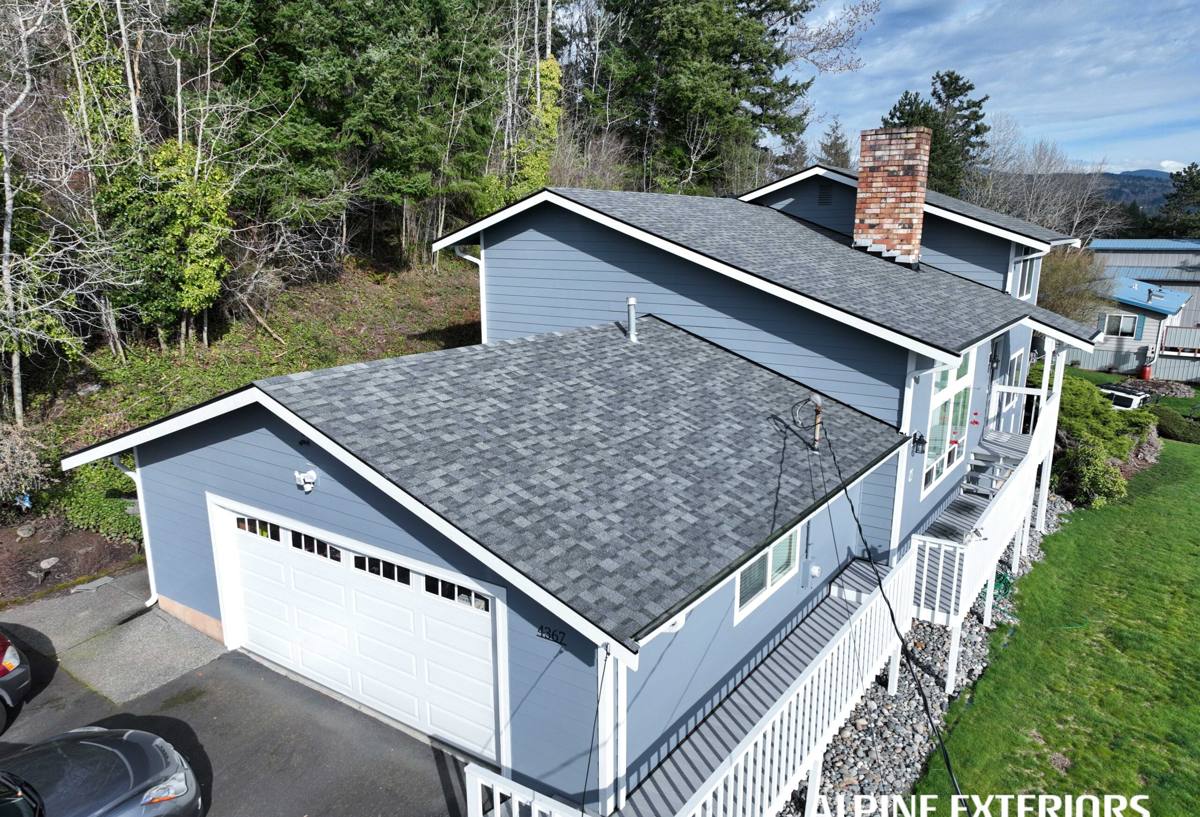
Why This Area's Storms Are Harder on Roofs
Whatcom County gets plenty of rain everywhere, but the Nooksack corridor has a few extra factors working against a roof's long-term health:
- Wind funneling: Open low-lying land near the river and surrounding farmland gives wind fewer obstructions, which means gusts can hit roof edges and ridge lines harder than in more sheltered, tree-dense neighborhoods.
- Driving rain: Storms here often come in sideways rather than straight down. That matters because a roof system designed to shed water vertically can still leak when wind drives rain up under shingle tabs, around flashing edges, and into vents.
- Salt air exposure: Proximity to the bay means metal flashing, fasteners, and vent components corrode faster than they would further inland. Corrosion is slow and easy to miss until it becomes a leak point.
- Persistent moisture and shade: Riverside tree cover keeps sections of many roofs shaded and damp longer after a storm passes, which extends the window where moss and organic growth can take hold.
None of these factors alone is unusual for Western Washington. Together, on a property near the Nooksack, they add up to a roof that ages differently than one in a drier, more sheltered part of Ferndale proper.
What Counts as Storm Damage (and What Doesn't)
Homeowners often assume storm damage means missing shingles or a visible hole. In practice, most storm-related roof problems we find are less obvious:
Common storm damage we find
- Lifted or creased shingle tabs from wind uplift, especially along ridges, hips, and roof edges
- Torn or displaced ridge cap shingles
- Flashing pulled loose or bent at chimneys, skylights, and wall intersections
- Granule loss from wind-driven rain and debris impact, which shows up as bare, shiny patches
- Fastener backout, where nails work loose as the roof deck flexes in high wind
- Debris punctures from broken branches, common where trees overhang the roofline
- Gutter and downspout separation, which redirects water onto fascia and siding it wasn't meant to hit
What's usually NOT storm damage
Moss growth, gradual granule loss from age, and slow flashing corrosion are wear-and-tear issues, not storm events — even though a storm often exposes them by finally causing a leak. This distinction matters for insurance purposes, which we'll get to below.
Our Storm Damage Repair Process
A rushed storm repair is one of the most common ways homeowners end up paying twice. Here's how we approach it:
1. Full roof inspection, not just the obvious spot
We check the entire roof plane, not just the area a homeowner points to. Wind damage on one slope is often a sign of stress on the opposite slope too, and we'd rather find every problem area in one visit than get called back after the next storm.
2. Document before we touch anything
Photos and notes on the damage as we found it, useful for your own records and for insurance if you choose to file a claim.
3. Match materials correctly
Repairs use shingles and flashing that match your existing roof system as closely as possible in type, weight, and profile. A mismatched patch is a future leak point and it looks bad besides.
4. Address the cause, not just the symptom
If wind lifted shingles because of weak fastening or an aging adhesive strip nearby, we address that section, not just the torn shingle itself. Patching a hole without checking why it failed just buys time.
5. Verify with a water test where needed
On leaks that were hard to pinpoint, we confirm the fix actually stops water before we call the job done.
Repair or Replace? What Actually Decides It
| Factor | Leans toward repair | Leans toward replacement |
|---|---|---|
| Roof age | Under 12-15 years, otherwise sound | Nearing or past expected lifespan for the material |
| Extent of damage | Isolated to one section or slope | Scattered across multiple slopes or widespread granule loss |
| Underlying deck condition | Deck is dry and solid | Deck shows soft spots or rot from a long-term leak |
| Moss and organic buildup | Light, surface-level growth | Heavy, longstanding moss with shingle degradation underneath |
| Flashing condition | Localized corrosion or displacement | Widespread corrosion from years of salt air exposure |
| Storm history | First significant damage event | Repeated repairs on the same roof over recent years |
We'll give you an honest read on which side of that line your roof falls on. Most storm calls in this area are legitimate repairs, not roofs that need full replacement — but we'll tell you plainly if we think you're near the end of the roof's useful life rather than sell you a patch that won't hold.
Moss, Moisture, and the Long Wet Season
Storm damage repair near the Nooksack can't be separated from the area's moss problem. A shaded, damp roof section that took wind damage during a storm is also the section most likely to already have moss working into the shingle surface. Moss holds moisture against the roofing material long after a storm passes, which slows drying and accelerates granule loss right at the repair site.
When we repair storm damage in a moss-prone area, we treat and clear moss from the surrounding section as part of the job, not as a separate upsell. Leaving moss in place around a fresh repair just sets up the same failure again next wet season.
Working With Insurance
Wind and storm damage is often covered under a standard homeowner's policy, but coverage depends on your specific policy and the cause of the damage, not on whether the roof simply looks bad. A few things that help:
- Get an inspection soon after a storm event, while the damage is clearly tied to a specific date
- Keep our documentation and photos with your own records before a claim is filed
- Understand that gradual issues like moss damage or age-related wear are typically treated differently than sudden storm damage
We're happy to provide an inspection report you can share with your insurer. We don't handle the claim itself, but a clear, honest assessment makes that conversation easier on your end.
Checklist: What to Do After a Storm
- Check the attic or top-floor ceilings for new water stains, even faint ones
- Look at gutters from the ground for shingle granules collecting after a storm
- Note any branches or debris that came down near or on the roofline
- Check downspouts are still attached and draining away from the foundation
- Avoid getting on the roof yourself, especially on a wet or moss-covered surface
- Call for an inspection before the next storm system rolls through, not after a second leak appears
Why Local Nooksack-Area Experience Matters
A roofer who mostly works drier, more sheltered neighborhoods can still do competent repair work, but they may not immediately recognize the combination of wind exposure, river-bottom moisture, and salt air that shapes how roofs fail out here. Knowing which flashing details tend to corrode first in this air, which roof orientations catch the worst of the wind coming off open farmland, and how fast moss regrows in shaded river-adjacent yards changes how a repair is scoped and where we look first.
We work storm damage calls throughout the Ferndale and greater Whatcom County area, including homes along the Nooksack corridor, and we bring that pattern recognition to every inspection rather than treating each roof as a generic repair job.
Get a Straightforward Estimate
If a recent storm has you wondering whether your roof took damage, we're glad to come take a look. The estimate is free, there's no pressure to move forward, and if the roof just needs a section repaired rather than a full replacement, we'll tell you that. Reach out through the form below to get a visit scheduled.