 Ferndale Exterior
 Roofing in a Border Peninsula Climate
Point Roberts sits on its own piece of geography — a small peninsula hanging off the bottom of the Tsawwassen area, surrounded on three sides by water and cut off by land from the rest of Washington State. That location is part of what makes it a beautiful place to own a home, and it's also exactly why roofs here wear out differently than roofs ten or twenty miles inland. Homes get steady exposure to salt-laden air coming off Boundary Bay and the Strait of Georgia, wind-driven rain that doesn't fall straight down so much as get pushed sideways into eaves and wall-roof transitions, and a moss season that runs long because the peninsula rarely gets a hard, sustained dry stretch to slow moss growth down.
None of that means a roof here is doomed to fail early. It means the installation has to account for those conditions from the first nail, not patch around them later. That's the difference between a roof that looks fine for five years and one that actually holds up for its full service life on this stretch of Whatcom County coastline.
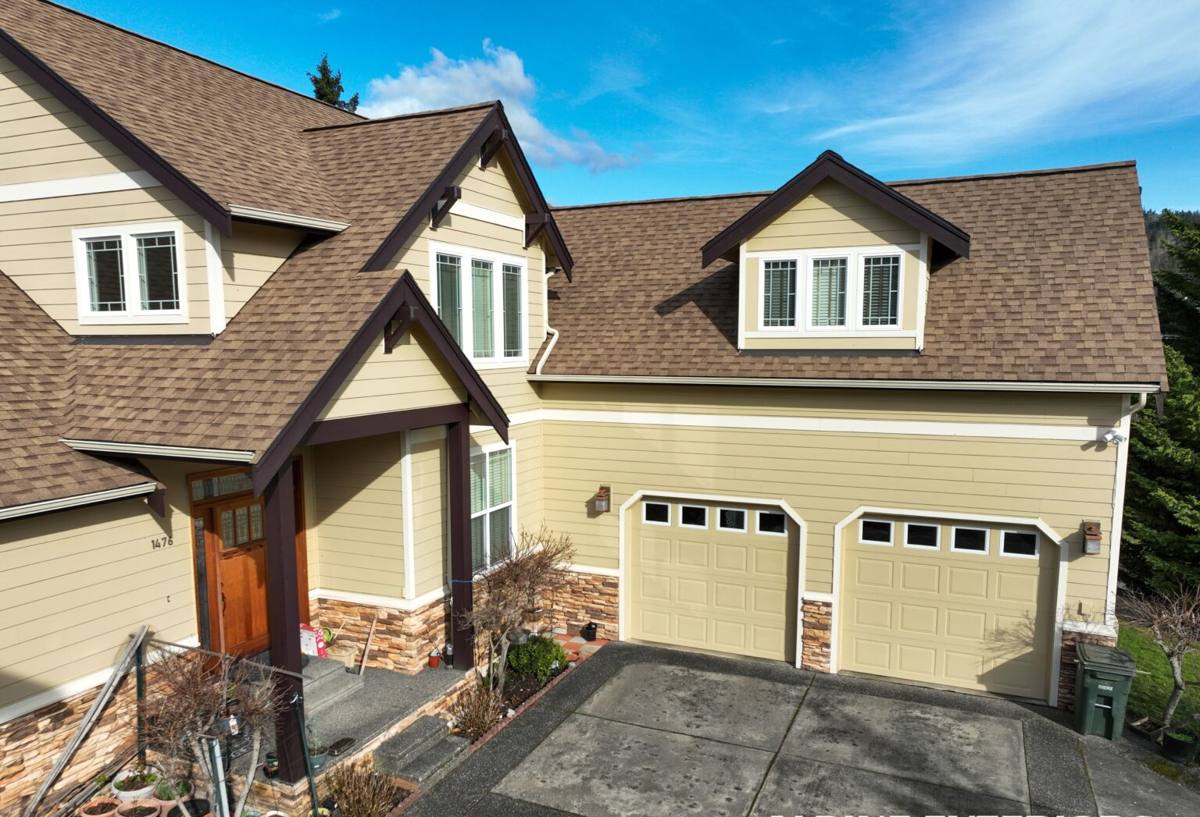
What Salt Air, Rain, and Moss Actually Do to a Roof
Salt air and metal components
Airborne salt accelerates corrosion on anything metal — flashing, fasteners, vent boots, drip edge. Cheap galvanized fasteners or bare steel flashing can start showing rust streaks and pitting well before the shingles above them are due for replacement. On a coastal install, the metal package matters as much as the shingle brand.
Driving rain and water intrusion points
Wind-driven rain doesn't respect the assumption that water only needs to shed downhill. It gets pushed up under shingle tabs, into open valleys, and around penetrations like plumbing vents and chimneys. Roofs built for calmer inland conditions sometimes skip extra protection at those spots — that's not an acceptable shortcut for a Point Roberts roof.
Moss and moisture retention
Moss isn't just cosmetic. It holds moisture against the roofing surface long after the rain has stopped, which shortens the life of asphalt shingles and can work its way under tabs and around fasteners over time. A long, damp moss season means moss control has to be part of the installation plan and the maintenance plan, not an afterthought.
Signs Your Point Roberts Roof Needs Replacing Rather Than Repairing
- Granule loss heavy enough that you're finding grit in gutters or downspouts regularly
- Shingles that are cupping, curling at the edges, or cracking when you look closely from the ground
- Moss or algae covering more than isolated patches, especially on north-facing or shaded slopes
- Rusted, lifted, or missing flashing around chimneys, skylights, or wall intersections
- Daylight visible through the roof deck from inside the attic, or damp insulation after storms
- Multiple past repairs in different spots — a sign the roof is failing broadly, not in one bad section
- The roof is at or past the age where its material's realistic service life ends in a coastal climate
If you're only seeing one or two of these, a targeted repair may still make sense. If several apply at once, that's usually the roof telling you it's cheaper in the long run to replace it once, correctly, than to keep chasing leaks.
Choosing the Right Roofing Material for This Location
There's no single "best" roofing material — there's the right material for your home, your budget, and this specific climate. Here's how the common options stack up for a Point Roberts install:
| Material | Coastal Performance | Moss/Moisture Behavior | Trade-Offs |
|---|---|---|---|
| Architectural asphalt shingle | Good, when paired with quality flashing and fasteners | Needs periodic moss treatment; algae-resistant granules help | Best balance of upfront cost and lifespan for most homes |
| Standing seam metal | Excellent when properly coated and fastened | Sheds moisture fast, resists moss buildup | Higher upfront cost; installation quality is critical near salt air |
| Cedar shake | Traditional PNW look, but needs diligent upkeep | High moisture retention risk; moss and rot pressure are real | We're honest with clients that this is the highest-maintenance option here |
| Synthetic/composite shake | Good, engineered to resist moisture absorption | Better moss resistance than natural cedar | Cost sits between asphalt and metal; product quality varies by brand |
For most Point Roberts homes, a well-installed architectural asphalt shingle system with upgraded underlayment and metal flashing gives the best combination of durability and value. Metal roofing earns its higher price tag on homes where owners want the longest possible interval between roof projects and don't mind the upfront investment.
What a Correct Installation Actually Involves
A new roof is only as good as what's underneath the shingles. On this peninsula, we treat these as non-negotiable parts of the job, not upgrades:
Full tear-off and deck inspection
We don't install over existing layers. A full tear-off lets us actually see the deck, replace any sheathing that's soft, delaminated, or water-stained, and confirm the structure underneath is sound before anything new goes down.
Ice-and-water or storm-grade underlayment at vulnerable areas
Eaves, valleys, and penetrations get self-adhering waterproof underlayment, not just standard felt. Given how often wind pushes rain into these transition points here, this is the single biggest factor in whether a roof stays leak-free through its life.
Corrosion-resistant flashing and fasteners
Given the salt air, we spec flashing and fasteners rated to hold up to coastal exposure rather than the cheapest galvanized option. It costs a bit more at install; it saves real money by not needing flashing replaced in year six or seven.
Proper ventilation
Balanced intake and exhaust ventilation keeps moisture from building up in the attic, which matters in a climate this damp. Poor ventilation shortens shingle life from underneath, even when everything above looks fine.
Valley and penetration detailing
Valleys, plumbing boots, and chimney flashing are where most roof leaks actually start. We give these areas extra attention rather than treating them as routine.
Our Installation Process
- On-site inspection and estimate. We walk the roof, check the attic and deck where accessible, and talk through material options honestly — including what we wouldn't recommend for your situation and why.
- Written scope and timeline. You get a clear breakdown of materials, underlayment, flashing, and ventilation work before any crew shows up, plus a realistic weather-dependent schedule.
- Tear-off and deck repair. Old roofing comes off completely; any compromised decking is identified and replaced before we move forward.
- Underlayment, flashing, and ventilation install. This is the layer that actually keeps water out — done carefully, not rushed.
- Roofing material installation. Shingles, metal panels, or shake go on per manufacturer spec, with attention to nailing pattern and exposure — details that affect wind resistance and warranty validity.
- Final walkthrough and cleanup. We check the finished roof with you, clean the site of debris and nails, and go over care going forward.
Why It Matters to Hire a Crew That Already Works Point Roberts
Point Roberts' location creates real logistics that a lot of contractors simply aren't set up for. Materials, equipment, and crews often have to cross the border to get there, which affects scheduling in a way that doesn't apply to a typical Whatcom County job site. A contractor unfamiliar with that reality can quote a timeline they can't actually hit, or skip a trip for a follow-up detail because the border crossing makes it inconvenient.
Working this area regularly also means we've already seen how the local exposure — salt air off the water, the wind patterns across the peninsula, the moss pressure through the wet months — plays out on real roofs over time. That's knowledge you can't get from a one-time job; it comes from being back in the area on a normal basis and following up on our own work.
After the Install: Keeping a Point Roberts Roof Healthy
A correctly installed roof still benefits from basic upkeep in this climate:
- Clear gutters and downspouts at least twice a year so wind-driven rain has somewhere to go
- Address moss growth early with appropriate treatment rather than letting it establish through a full wet season
- Keep overhanging branches trimmed back to reduce shade, debris buildup, and abrasion on the roofing surface
- Have flashing and penetrations checked periodically, since these fail before the field of the roof usually does
- Schedule a look after major windstorms to catch lifted shingles or damaged flashing before they become leaks
None of this replaces a quality installation — it's what protects the investment once the crew has left.
If your Point Roberts roof is showing its age or you're planning ahead for a replacement, we're happy to take a look and give you a straightforward, no-pressure estimate. Use the form below to get started.