 Ferndale Exterior
 Point Roberts Roofs Face a Different Kind of Weather
Point Roberts sits on its own peninsula, exposed to open water on three sides. That geography means homes there take a harder beating than most inland Whatcom County properties. Wind off the Strait of Georgia drives rain sideways into roof edges and flashing details that were never designed to handle horizontal water. Salt-laden air corrodes exposed fasteners, flashing, and metal roofing components faster than it would a few miles inland. And the long, wet Pacific Northwest winter gives moss and moisture months to work into every seam, nail hole, and shingle lap before a proper dry stretch ever shows up.
None of that is exotic knowledge, but it changes what "storm damage repair" needs to mean on a Point Roberts roof. A patch that would hold fine on a sheltered roof in Ferndale proper can fail within a season out on the point if it's not built for the wind and salt exposure specific to that location.
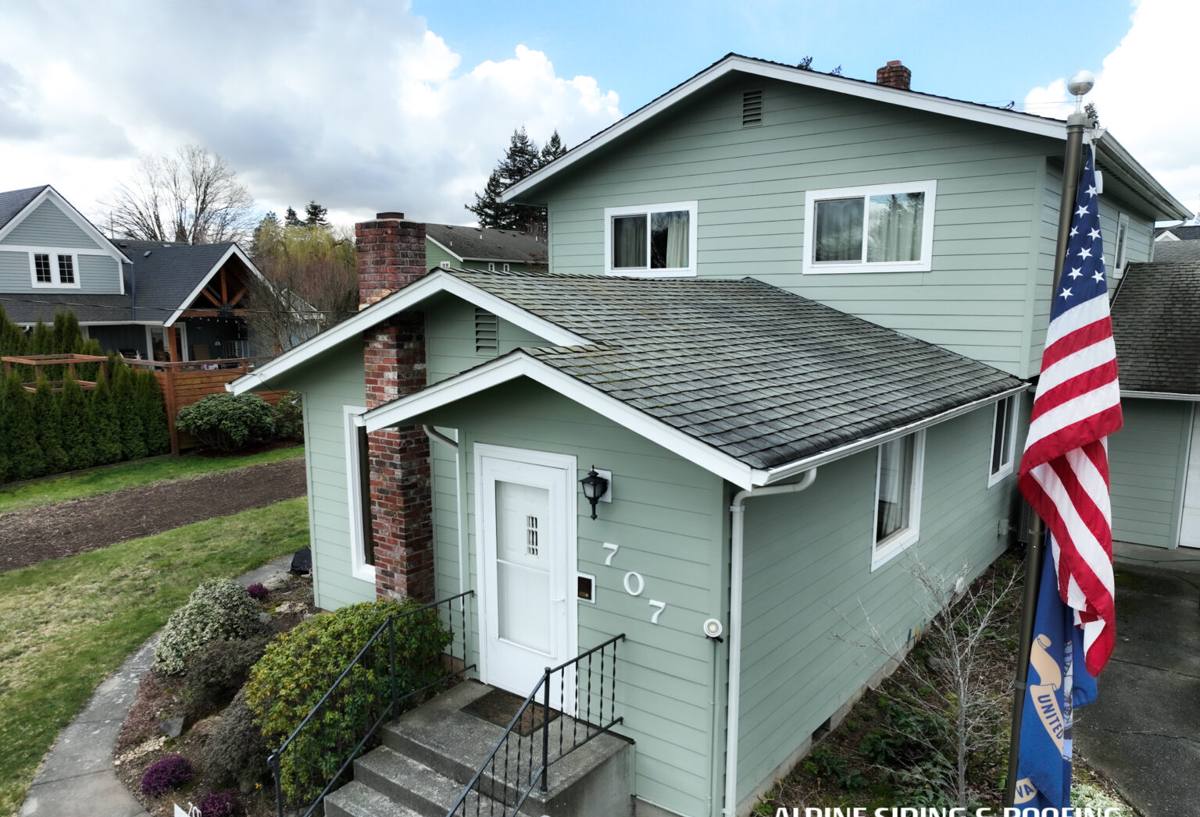
What Storm Damage Actually Looks Like Out Here
Storm damage on this stretch of coastline rarely announces itself with a hole you can see from the ground. More often it's quieter and easier to miss until it's already caused interior damage:
- Wind-lifted or creased shingles along ridges and rake edges where gusts get the most leverage
- Flashing pulled loose or bent at chimneys, skylights, and roof-to-wall transitions
- Granule loss and cracking from wind-driven debris and repeated flexing in storms
- Torn or lifted underlayment at penetrations after sustained horizontal rain
- Moss-clogged valleys and gutters that turn ordinary rain into standing water during the next storm
- Corroded or backed-out fasteners on older metal roofing and flashing
Any one of these can let water in slowly over weeks rather than all at once, which is exactly why a proper post-storm inspection matters even when nothing looks obviously wrong from the driveway.
Point Roberts Is Its Own Animal — Logistically
Point Roberts is a U.S. exclave that's only reachable by land through Canada, or by water. That's not a detail most roofing companies think about until they're already committed to a job, and it matters more than people expect. Crews and material deliveries have to cross an international border to reach the property. That means:
- Trips need to be planned and consolidated — a crew that has to make three separate border crossings for one repair is going to take longer and cost more than one that plans the job properly upfront
- Materials need to be staged and loaded correctly the first time, since running back for a missed item isn't a quick errand
- Scheduling around border wait times and crossing hours is part of the job, not an afterthought
A contractor who already works Point Roberts regularly has this logistics figured out. One who doesn't will either pass those inefficiencies on to you in price and delay, or worse, cut corners to avoid extra trips.
What a Correct Storm Damage Repair Involves
1. A Real Inspection, Not a Guess
A proper storm damage assessment starts on the roof itself, not from binoculars in the yard. That means checking every ridge, valley, penetration, and edge for lifted or cracked shingles, displaced flashing, and soft spots in the decking underneath. We also check the attic side when accessible, since water staining, damp insulation, or daylight through the sheathing tells us things the exterior surface won't.
2. Emergency Protection First
If a roof is actively leaking or has exposed decking, the first priority is stopping further water intrusion — tarping, temporary flashing, or sealing exposed areas — before we ever talk about the permanent fix. Interior damage from an unprotected roof almost always costs more than the roof repair itself.
3. Matching the Repair to the Actual Damage
Not every storm-damaged roof needs full replacement, and not every "repair" should be a patch. The right call depends on the age of the roofing, how widespread the damage is, and whether the underlying decking and underlayment are still sound. We explain what we find and what our recommendation is based on, in plain terms, before any work starts.
4. Building the Repair for the Site, Not a Generic Standard
On a peninsula like Point Roberts, we use corrosion-resistant fasteners and flashing details rated for coastal exposure, not standard-grade hardware that's fine sixty miles inland but will start rusting within a couple of winters here. Sealants and underlayment choices also account for the extended damp season — this isn't a climate where a fair-weather fix has much time to prove itself before the next atmospheric river rolls through.
Repair or Replace? What Actually Drives That Decision
Homeowners often ask this on the phone before we've even seen the roof, and the honest answer is "it depends on a few specific things." Here's what actually factors into that call:
| Factor | Leans Toward Repair | Leans Toward Replacement |
|---|---|---|
| Roof age | Under 10-12 years, otherwise sound | Nearing or past expected lifespan |
| Extent of damage | Localized to one section or detail | Widespread across multiple slopes |
| Decking condition | Solid, no rot or soft spots | Soft, delaminated, or water-stained decking |
| Moss/algae history | Minor, surface-level growth | Long-term moss undermining shingle seal |
| Prior repairs | First significant repair needed | Multiple past patches, recurring leaks |
| Insurance involvement | Isolated storm event, clear cause | Cumulative wear plus storm damage combined |
We'll walk you through where your roof lands on each of these before recommending a direction — not before, based on a phone description alone.
How Our Process Works, Start to Finish
- Initial call: We get a description of the damage and timeline urgency, and plan the visit efficiently given the border crossing involved.
- On-site inspection: Full roof and, where possible, attic assessment, with photos and a clear written explanation of findings.
- Emergency stabilization if needed: Tarping or temporary sealing to stop active water intrusion the same visit, when conditions require it.
- Written estimate: A scope of work and cost range based on what we actually found, not a generic template.
- Scheduled repair: Work planned around weather windows and consolidated logistics for the crossing.
- Final walkthrough: We review the completed work with you before calling the job done.
Materials and Methods Built for This Coastline
We favor asphalt shingle systems and metal roofing components with coastal-grade corrosion resistance for Point Roberts work, along with ridge and valley details sealed for sustained wind-driven rain rather than the lighter standard used in more sheltered locations. On roofs with a history of moss buildup, we also address the conditions that let moss take hold in the first place — shaded, damp valleys and clogged gutters — since a repair that ignores the underlying moss problem is just delaying the next call.
We don't push premium products as a blanket upsell. Where a mid-grade shingle or standard flashing detail will genuinely hold up given the roof's exposure and pitch, that's what we recommend. Where the site's wind and salt exposure justify a heavier-duty detail, we'll say so and explain why, including the trade-off in upfront cost.
Insurance and Storm Claims
Many storm damage repairs on Point Roberts do end up going through homeowners insurance, especially after a named wind event. We provide the documentation — photos, a written scope, and a clear description of cause and damage — that adjusters typically need. We're not a public adjuster and won't promise a claim outcome, but we can make sure the physical evidence and paperwork on our end are solid before you file or while a claim is in process.
What to Do Right After a Storm
- Check ceilings and attic spaces for new water stains or damp spots
- Look at gutters and downspouts from the ground for debris, moss clumps, or visible sagging
- Note any shingles or roofing debris in the yard — that's a strong sign of wind damage above
- Avoid getting on the roof yourself, especially on wet or mossy surfaces
- Call for an inspection promptly — a small leak addressed early is a repair; the same leak ignored through another storm cycle can become a decking or insulation replacement
Why Local Experience in Point Roberts Actually Matters
A roofing crew that only occasionally works Point Roberts is learning the border logistics, the wind exposure, and the salt-air material requirements on your job. A crew that already works the area regularly has that groundwork done — which shows up as fewer surprise delays, fewer repeat trips, and a repair built correctly for the site the first time. That local familiarity, combined with straightforward communication about what your roof actually needs, is what separates a repair that holds up through the next winter's storms from one that doesn't.
If you're dealing with storm damage on a Point Roberts roof, we're happy to take a look and give you a clear, no-pressure estimate — just fill out the form below to get started.