 Ferndale Exterior
 Roofing on the Water in Sandy Point
Sandy Point sits right up against the water, which means the roofs out there live a different life than roofs a few miles inland in Ferndale or Whatcom County proper. Salt-laden wind off the water, near-constant humidity, and long stretches of shade from evergreen trees add up to conditions that shorten the working life of a roof if it isn't built and maintained for that specific mix of stresses. We've worked enough roofs in Sandy Point to know what actually fails first out there, and it's rarely the same thing that fails on a roof in town.
This page covers roof replacement specifically for Sandy Point homes — what wears out and why, what a correct replacement should include, how we run the job, and what to expect if you're getting quotes right now.
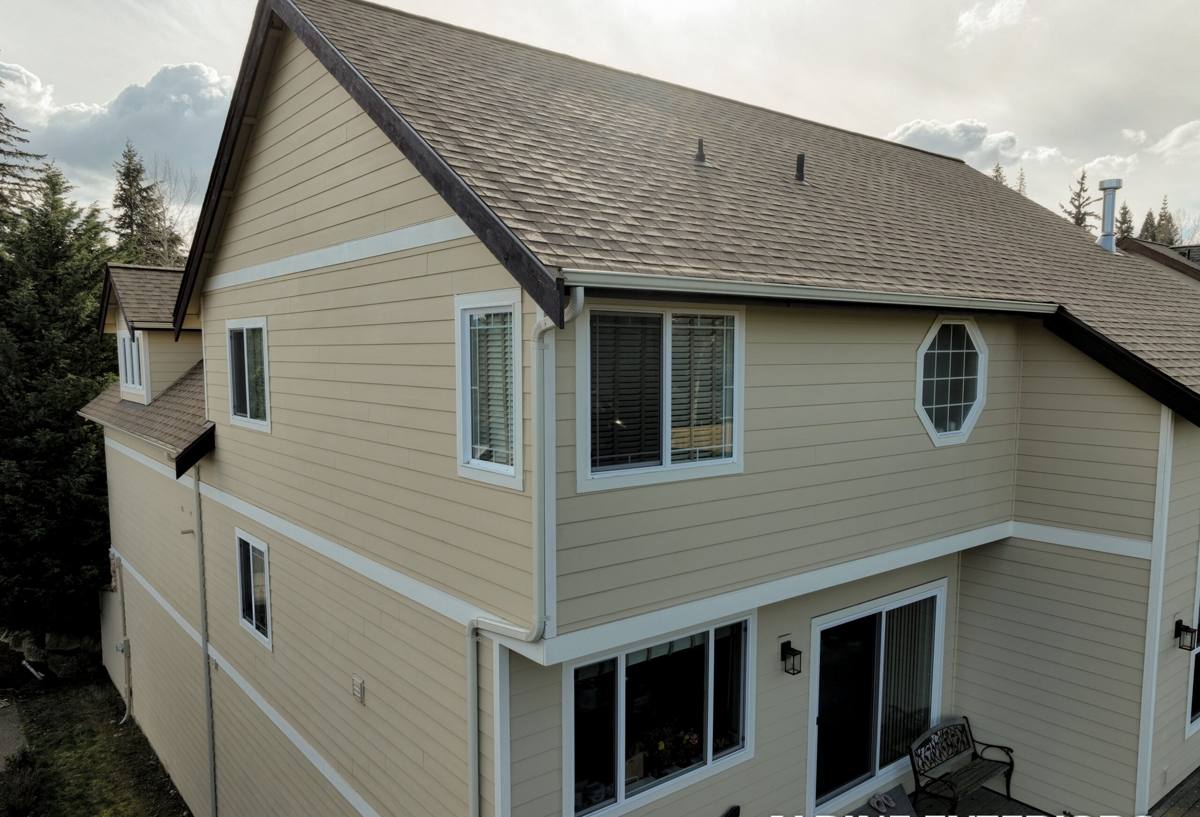
What Salt Air, Wind, and Moss Actually Do to a Roof
Salt Air and Metal Components
Salt in the air accelerates corrosion on anything metal — flashing, fasteners, vent caps, gutter hardware. On a standard inland roof you might get decades out of galvanized flashing before it shows real wear. Close to the water, that timeline compresses. Fasteners that aren't corrosion-rated can start rusting and weeping stains down a roof face well before the shingles themselves are due for replacement.
Driving Rain and Wind-Driven Water
Sandy Point catches wind directly off the water, and that wind pushes rain sideways into laps, seams, and edges that a calmer inland roof would never see stressed the same way. Underlayment quality, fastening patterns, and edge details matter more here than on a sheltered lot. A roof that's merely "up to code" for a protected site can still underperform in a spot this exposed.
Moss, Shade, and Moisture Retention
Whatcom County's long wet season already favors moss growth, and shaded, tree-lined lots around Sandy Point make it worse. Moss holds moisture against the roof surface, works its way under shingle tabs as it grows, and keeps that section of roof damp far longer than open, sun-exposed areas. Over years, that constant dampness degrades shingles and, on older roofs, can start affecting the sheathing underneath.
Signs a Sandy Point Roof Needs Replacement, Not Just Repair
Not every roofing problem out here calls for a full tear-off. But there's a point where patching stops making financial sense and a full replacement becomes the honest recommendation. Signs we look for:
- Granule loss heavy enough that you can see bare, shiny patches on multiple shingles, not just one or two
- Moss established across large sections rather than isolated spots — a sign of long-term moisture retention, not a one-season issue
- Flashing and fasteners showing active rust or staining down the roof face or siding
- Curling, cupping, or cracked shingles concentrated on wind-exposed slopes facing the water
- Soft spots, sagging, or visible deck movement when walked
- A roof already past or near the end of its rated material lifespan, especially if it was installed with standard (not coastal-rated) materials
If a roof is showing one or two of these in isolation, repair is often the right call and we'll say so. If several are showing up together, that's usually a sign the whole system — not just the shingles — is reaching the end of its useful life.
What a Correct Replacement Looks Like Out Here
Tear-Off and Deck Inspection
Every replacement starts with a full tear-off to bare deck, not a layover. That's the only way to actually see what's underneath — moisture damage, soft sheathing, or venting problems hide under old roofing and don't show up until the old layer is gone. Any damaged decking gets replaced before anything new goes down.
Underlayment and Ice-and-Water Protection
Given the wind-driven rain a waterfront property like Sandy Point sees, we don't treat underlayment as a formality. Synthetic underlayment across the field, with self-adhered ice-and-water membrane at eaves, valleys, and any low-slope transitions, gives the roof a second line of defense if wind ever pushes water past the shingle laps.
Corrosion-Resistant Flashing and Fasteners
For a property this close to salt air, we spec flashing and fasteners rated for coastal exposure rather than standard galvanized hardware. It costs a little more up front and saves you from the rust streaks and premature flashing failures that show up on roofs built with standard materials in a marine environment.
Ventilation Sized for the Site
Balanced intake and exhaust ventilation matters everywhere, but on a shaded, moisture-heavy lot it's what keeps the attic space from staying damp and encouraging the same moss and mildew problems you're trying to get away from on the surface. We check existing ventilation as part of every estimate and correct it as part of the replacement, not as a pricey add-on afterward.
Material Options for a Sandy Point Roof
There's no single "best" roofing material for every home — it depends on your budget, your roof's exposure, and how much long-term maintenance you want to take on. Here's how the common options actually perform in this specific environment:
| Material | Coastal / Moss Performance | Maintenance | Typical Lifespan Here |
|---|---|---|---|
| Algae-resistant asphalt shingle | Good — copper/zinc granules resist moss and algae growth better than standard shingles | Low to moderate; periodic soft-wash still recommended | 20–30 years with proper ventilation |
| Standard asphalt shingle | Fair — no built-in moss resistance, shows growth sooner on shaded slopes | Higher; more frequent moss treatment needed | 15–20 years in this environment |
| Metal (standing seam, coastal-rated fasteners) | Very good — sheds moisture fast, little surface for moss to grip | Low; occasional fastener and seam check | 40+ years with correct coastal-grade hardware |
| Composite / synthetic shingle | Good — resists moisture absorption, holds up to wind-driven rain well | Low to moderate | 30–40 years |
We don't push one material on every roof. A steep, sun-exposed slope on a Sandy Point home might do perfectly well with a quality algae-resistant asphalt system, while a shaded, low-slope section might be a better candidate for metal. That's a conversation we have on-site, not a one-size answer.
Why We're Selective About Certain Products
Some lower-cost roofing products aren't a good fit for a site this exposed — not because they're bad products broadly, but because their moisture behavior, installation tolerances, or warranty terms assume a more sheltered site than a waterfront lot like Sandy Point. We'll walk you through why we do or don't recommend a specific product for your roof, based on your slope, shade, and exposure — not a blanket sales pitch either direction.
How We Run a Sandy Point Roof Replacement
- On-site inspection and estimate. We walk the roof, check attic ventilation, look at flashing and decking condition, and give you a written estimate with material options — no pressure, no upsell games.
- Material selection. We talk through the trade-offs for your specific roof — slope, sun exposure, shade, and budget — and land on a material that fits.
- Scheduling around the weather. Roof replacements need a dry work window. We plan around Whatcom County's forecast and won't tear off more roof than we can dry-in the same day.
- Tear-off, deck repair, and dry-in. Old roofing comes off, decking is inspected and repaired as needed, and the roof is dried in with underlayment before anything else happens.
- Installation. New flashing, ventilation corrections, and the roofing material go on to manufacturer specs and correct fastening for a wind-exposed site.
- Cleanup and walkthrough. Full site cleanup including magnetic sweep for stray fasteners, then a walkthrough so you know exactly what was done and what to expect going forward.
What to Expect During the Job
Most straightforward roof replacements on a Sandy Point-sized home take one to a few days on-site, weather permitting — wind and rain off the water can push a schedule, and we'd rather delay a day than install underlayment or shingles in conditions that compromise the work. Expect noise, some debris in the yard during tear-off (we protect landscaping and do a full cleanup), and vehicles staged for the duration. We'll walk you through the schedule before we start so there aren't surprises.
Why a Crew That Already Works Sandy Point Matters
A roofing crew that's worked other properties in Sandy Point already knows the wind exposure, the moss patterns on shaded lots, and which flashing and fastener choices hold up here versus a few miles inland. That's not a marketing line — it changes real decisions on your roof, from how much ice-and-water membrane to run at the eaves to whether standard fasteners are even a reasonable choice for your slope. Working out of Ferndale, we're close enough to Sandy Point to be responsive if something needs a follow-up look, and familiar enough with the area's specific weather pattern to spec the job correctly the first time.
After the Install: Keeping a Sandy Point Roof Healthy
A correctly installed roof still needs some ongoing attention in this environment. A simple maintenance routine goes a long way toward hitting the full lifespan of your new roof:
- Have moss growth treated or soft-washed before it establishes under shingle tabs, not after
- Keep gutters clear so wind-driven rain has somewhere to go besides under the roof edge
- Trim back overhanging branches to reduce shade and debris buildup on the roof surface
- Have flashing and fasteners visually checked every couple of years for early rust or corrosion signs
- Confirm attic ventilation is still clear and unobstructed, especially after any insulation work
None of this is expensive or complicated, but skipping it is the single biggest reason a well-installed roof underperforms its expected lifespan on a site like this.
Get a Straight Answer on Your Roof
If your Sandy Point roof is showing wear, or you just want an honest read on how much life it has left, we're happy to take a look and give you a straightforward estimate — no pressure, no obligation. Use the form below to request a free estimate and we'll get back to you to schedule a time.