 Ferndale Exterior
 Board & Batten Siding Built for Semiahmoo's Coastal Conditions
Homes near Semiahmoo sit close enough to the water that the siding on them is doing a different job than siding on a house ten miles inland. Salt-laden air, wind-driven rain off the Strait, and a moss season that can stretch from October through May all put steady pressure on exterior materials. Board and batten siding — with its strong vertical lines and deep shadow reveals — is a popular choice out here because it reads as substantial and coastal-appropriate. But that same profile has more seams, more fastener points, and more places for water to find a way in than a standard lap siding job. Done right, board and batten holds up beautifully in this environment. Done wrong, it becomes a maintenance headache within a few years. This page covers what a correct board and batten installation looks like for a Semiahmoo-area home, and why the material and the crew you choose both matter more here than they would somewhere drier and further from the coast.
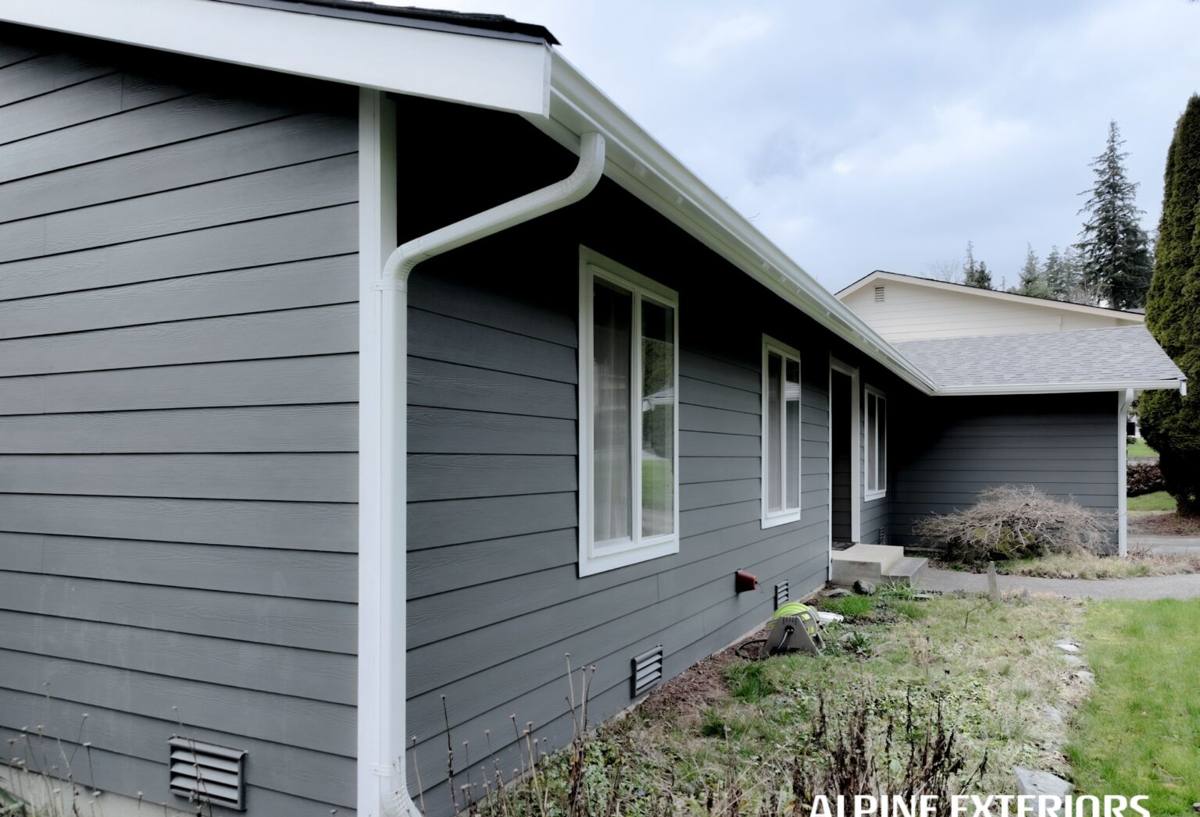
Why Semiahmoo's Climate Is Tougher on Siding Than It Looks
Whatcom County's marine climate is mild, which can be deceiving. Mild doesn't mean easy on materials — it means constant. Homes near Semiahmoo deal with a combination of factors that compound over time rather than hitting all at once:
- Salt air corrosion: Airborne salt accelerates the breakdown of unprotected fasteners, cheap trim, and lower-grade coatings, especially on the sides of a home facing open water or prevailing wind.
- Driving rain: Storms coming off the water don't just fall straight down — wind pushes rain sideways into vertical seams and battens, which is exactly where board and batten siding is most vulnerable if the water-resistive barrier and flashing weren't detailed correctly.
- Extended moss and algae season: Persistent damp shade on north-facing and tree-sheltered walls gives moss and mildew a long runway to establish, which holds moisture against the siding surface far longer than a quick summer rain would.
- Temperature swings and freeze-thaw cycling: Even mild winters bring cycles of moisture absorption and freezing, which is hard on any material that isn't dimensionally stable.
None of this makes board and batten a bad choice near Semiahmoo. It means the installation details that are optional in a drier inland climate become mandatory here.
What "Correct" Board & Batten Installation Actually Requires
The Water Management Layer Comes First
Before a single board goes up, the wall needs a continuous, properly lapped water-resistive barrier with flashing integrated at every window, door, and penetration. Board and batten's vertical battens create dozens of extra fastening points compared to horizontal lap siding, and every one of those points is a potential leak path if the barrier underneath isn't doing its job. On a Semiahmoo-facing wall taking direct wind-driven rain, this layer is the difference between a siding system that sheds water and one that traps it.
Fastener Selection and Placement
In a salt-air environment, fastener quality is not a place to cut corners. Corrosion-resistant, manufacturer-approved fasteners driven at the correct depth and spacing prevent the streaking, staining, and eventual board movement that comes from fasteners that rust or back out over time. Over-driven or under-driven nails are one of the most common defects we find on board and batten jobs that weren't installed to spec.
Batten Spacing and Gapping
Boards and battens need to be installed with the manufacturer's specified gap to allow for expansion and contraction. Too tight, and the material has nowhere to move, which can cause buckling or cracking. Too loose, and you lose the clean, tailored look that makes board and batten attractive in the first place — plus you open a wider path for wind-driven rain to get behind the boards.
Caulking and Sealant Discipline
Every joint, seam, and transition needs the right sealant, applied correctly and allowed to cure properly. On a home exposed to salt air and constant humidity, low-quality or improperly applied caulking fails faster than almost anywhere else in the region. This is a small line item that has an outsized effect on long-term performance.
Why We Install James Hardie — Not Vinyl, LP, or Cedar — for This Application
Board and batten is installed in more products than most homeowners realize, and the choice of material matters even more in a coastal, high-moisture environment like Semiahmoo. We install James Hardie fiber cement siding exclusively, and for board and batten specifically, the reasoning is straightforward:
| Material | Why it's a harder sell near Semiahmoo |
|---|---|
| Vinyl board and batten | Vinyl expands and contracts more than fiber cement with temperature swings, and in coastal wind it can rattle, warp, or pull away from fastening points over time. It also doesn't hold up to impact or UV as well as fiber cement over a multi-decade lifespan. |
| LP SmartSide (engineered wood) | Engineered wood products rely on their factory treatment and coating staying fully intact to resist moisture. In a climate with this much sustained dampness and moss growth, any breach in that coating gives moisture a path into the wood substrate. |
| Primed spruce or cedar | Real wood is a beautiful, traditional choice, but it demands ongoing maintenance — refinishing, sealing, and moisture monitoring — that most homeowners underestimate until moss and mildew take hold in a marine climate. |
| James Hardie fiber cement | Non-combustible, dimensionally stable, and engineered with HZ product lines suited to specific climate zones. The factory-applied ColorPlus finish resists the fading and moisture intrusion that plague field-finished materials, backed by a strong transferable warranty. |
We're not saying every other product fails on every house. We're saying that after years of working on Whatcom County's coastal and near-coastal properties, fiber cement is what we're willing to stand behind for a profile as detail-sensitive as board and batten in this climate.
Our Process for a Semiahmoo-Area Board & Batten Project
- On-site assessment: We look at wall exposure, existing moisture damage, roofline drainage, and how much direct salt air and wind-driven rain each elevation actually takes — a south wall and a water-facing wall are not the same problem.
- Water management plan: We map out the water-resistive barrier, flashing details, and any trim or transition points specific to your home's construction before ordering material.
- Material selection: We help you choose the right James Hardie HZ product line, profile width, and ColorPlus finish for your home's exposure and your aesthetic goals.
- Installation to manufacturer spec: Correct fastener type, spacing, gapping, and sealant application — no shortcuts on the details that matter most in this climate.
- Final walkthrough: We review the finished job with you, including basic care guidance so you know what to expect and what (if anything) needs periodic attention.
Signs Your Current Board & Batten Siding May Be Failing
- Visible streaking or rust trails running down from fastener points
- Soft spots, bubbling, or discoloration around seams and battens
- Persistent moss or algae buildup that returns quickly after cleaning
- Gaps opening up between boards and battens, or boards that have started to cup or bow
- Caulking that's cracked, shrunk, or pulled away from joints
Why Local Experience Matters for This Job
Board and batten siding is installed the same way in a training manual regardless of where the house sits. What changes is how forgiving the local conditions are of small mistakes. A crew that mostly works drier, inland jobs can get away with installation habits that simply don't hold up on a wind- and salt-exposed wall near Semiahmoo. Working Whatcom County's coastal properties regularly means we've seen which details actually matter here — where wind-driven rain concentrates, which elevations grow moss fastest, and which fastener and flashing choices hold up over years rather than looking fine on install day and failing five years later.
What This Means for Your Timeline and Investment
Board and batten siding generally costs more than standard lap siding to install, mainly due to the additional material (battens plus boards) and the extra labor involved in precise spacing and fastening. The exact investment depends on your home's size, current siding condition, wall exposure, and any trim or repair work needed underneath. We provide a clear, itemized estimate after an on-site assessment — no surprise add-ons once work begins.
If you're considering board and batten siding for a home near Semiahmoo, or your existing siding is showing signs of wear from the salt air and moss season, we're happy to take a look and walk you through your options. Reach out for a free, no-pressure estimate — we'll assess your home's specific exposure and give you an honest recommendation, whether that's a full replacement or targeted repairs.