 Ferndale Exterior
 Sudden Valley Roofs Face a Specific Combination of Problems
Sudden Valley sits in a pocket of Whatcom County where the roofing challenges stack on top of each other instead of taking turns. You've got moisture-laden air moving in off the water, heavy tree cover shading large sections of most roofs for much of the day, and a rainy season that runs long even by Pacific Northwest standards. None of these problems is unusual on its own. Together, they shorten the useful life of a roof that wasn't built or installed with this specific combination in mind.
Salt-influenced air corrodes exposed metal fasteners and flashing faster than it would further inland. Driving rain, especially when it comes in sideways during winter storms, finds every weak seam, undersized flashing detail, and poorly lapped underlayment edge. And shade from mature trees keeps roof surfaces damp long after the rain stops, which is exactly the condition moss and moss-related shingle damage need to take hold. A roof designed for a drier, more open lot elsewhere in the county won't perform the same way here.
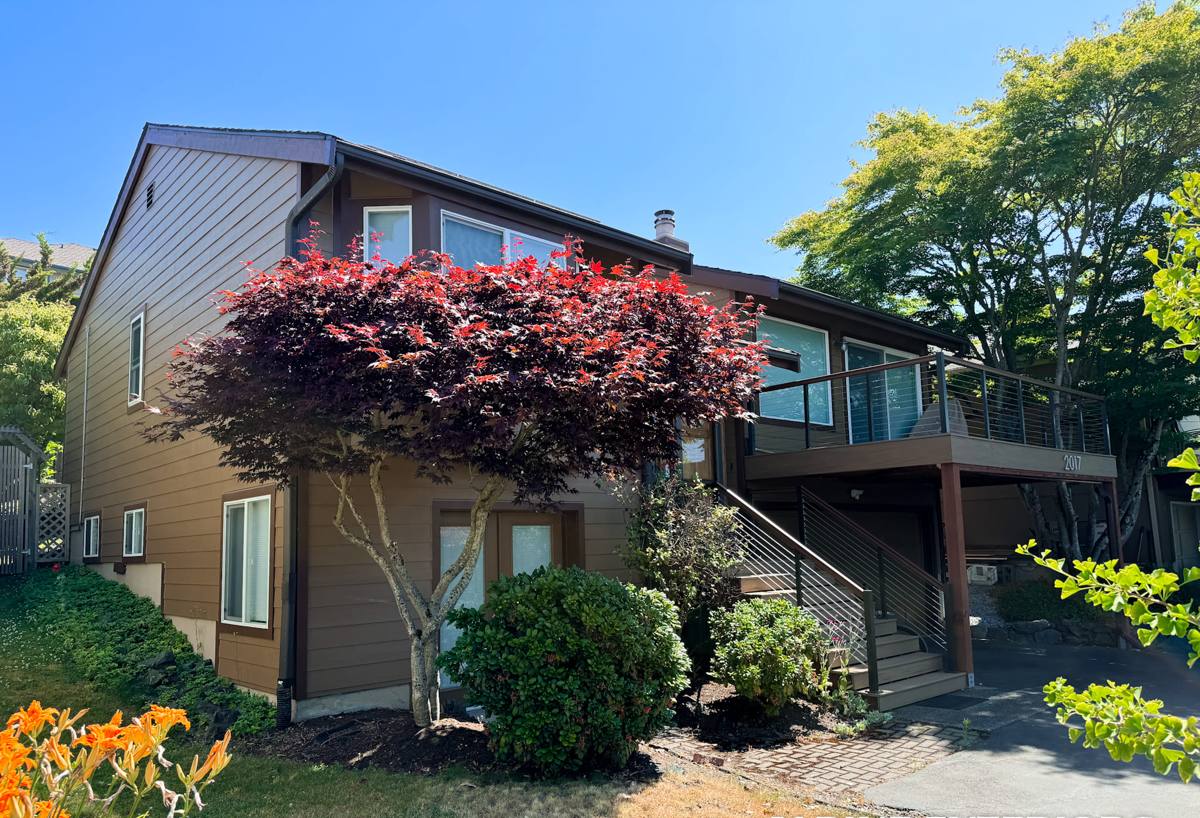
Signs a Sudden Valley Roof Needs Replacement, Not Another Repair
We get called out to a lot of roofs that homeowners assume just need a patch. Sometimes that's true. Often, once we're up there, it's clear the roof has moved past the point where repairs make financial sense. A few signs that tip the decision toward full replacement:
- Granule loss heavy enough that you can see bare, shiny patches on multiple slopes, not just one weathered area
- Moss that has worked its way under shingle edges rather than just sitting on the surface
- Soft or spongy decking felt underfoot when walking the roof, a sign moisture has reached the wood
- Daylight visible through the attic sheathing, or staining on attic rafters and insulation
- Multiple past repairs in different areas, meaning the underlying material is failing broadly, not in one spot
- A roof already past 20-25 years old for asphalt products, regardless of how it looks from the ground
If only one or two of these apply, a repair may still be the right call, and we'll say so. We don't sell replacements to homeowners who don't need one yet — but when the underlying materials are failing, patching just delays a bigger bill and risks interior damage in the meantime.
What a Correct Installation Actually Involves
Tear-Off and Deck Inspection
Every proper installation starts with a full tear-off down to the decking, not an overlay. This is the only way to actually see the plywood or OSB underneath and find soft spots, delamination, or rot before they're sealed under new material. In a tree-shaded, moisture-heavy neighborhood like Sudden Valley, deck damage is more common than in drier parts of the county, and it's the one thing you can't afford to cover up.
Underlayment and Ice/Water Protection
We use synthetic underlayment across the full roof deck, with self-adhered ice and water barrier at eaves, valleys, and any low-slope transitions — the places where wind-driven rain is most likely to work its way backward under the shingles. This detail matters more here than it would on a roof in a drier microclimate, because the volume and duration of rain events in this part of Whatcom County give water more opportunities to find a weak point.
Flashing
Flashing around chimneys, skylights, sidewalls, and roof-to-wall transitions is where most leaks actually start, not in the open field of shingles. We install new flashing rather than reusing old pieces, and we choose corrosion-resistant materials given the salt-influenced air that moves through this area. Reused or undersized flashing is one of the most common failure points we find when we tear off an older roof.
Ventilation
Proper intake and exhaust ventilation keeps the attic dry and temperature-balanced, which protects the new roof from the inside as well as the outside. Under-ventilated attics trap moisture, and trapped moisture accelerates decking rot and shortens shingle life — a slower version of the same moss-and-moisture problem happening on the surface.
Choosing the Right Roofing System for This Terrain
There's no single "best" roofing material for every home in Sudden Valley — the right choice depends on your roof's slope, how much shade it gets, and your budget. Here's how the common options compare for a shaded, moisture-heavy lot:
| Material | Typical Lifespan | Moss/Moisture Resistance | Relative Cost |
|---|---|---|---|
| Standard 3-tab asphalt | 15-20 years | Lower — needs more frequent moss treatment | Lowest |
| Architectural (laminate) shingle | 25-30 years | Moderate to good, especially with algae-resistant granules | Moderate |
| Metal (standing seam or panel) | 40-50+ years | Very good — sheds moisture and resists moss growth | Highest |
| Cedar shake | 20-30 years with upkeep | Poor without regular maintenance — holds moisture | High |
For heavily shaded lots — common throughout Sudden Valley — we usually steer homeowners toward architectural shingle with algae-resistant granules or metal roofing, both of which hold up better against sustained dampness than standard 3-tab shingle or untreated cedar. We're not against cedar as a look, but we're upfront that it demands a maintenance commitment that many homeowners underestimate once trees are shading the roof most of the day. That's a trade-off, not a defect in the product — it just needs an owner willing to keep up with it.
Our Installation Process, Start to Finish
- On-site inspection and honest assessment of whether repair or replacement is the right call
- Written estimate covering material options, tear-off, decking repair contingencies, and timeline
- Permit pulled through the appropriate Whatcom County jurisdiction before work begins
- Full tear-off, deck inspection, and any necessary sheathing repair or replacement
- Underlayment, ice/water barrier, and flashing installation
- New roofing material installed per manufacturer specifications, including proper nailing pattern and exposure
- Ventilation check and adjustment where needed
- Final walkthrough with the homeowner and cleanup, including magnetic sweep for stray nails
We don't skip the walkthrough. You should be able to see and ask about the finished work before we consider the job done.
Permits, Codes, and Warranty Coverage
New roof installations in Whatcom County require a permit, and skipping that step can cause real problems later — at resale, with insurance claims, or if work needs to be inspected for a warranty issue. We pull the permit and schedule required inspections as part of the job, not as an afterthought. On the warranty side, you're typically looking at two separate things: the manufacturer's material warranty and our workmanship warranty. We'll walk you through exactly what each one covers and, just as importantly, what it doesn't — most manufacturer warranties are prorated over time and have specific requirements for ventilation and installation method that have to be met to stay valid.
Why a Crew That Already Works Sudden Valley Matters
A roofing crew that regularly works this specific area has already seen how the local conditions play out over time — which flashing details tend to fail first, which roof orientations hold moss longest, which older homes in the area were built with decking that needs extra attention during tear-off. That's not a marketing point, it's practical experience that shows up in fewer surprises mid-project and a roof that's actually detailed for the climate it has to survive, rather than installed to a generic spec sheet. As a Ferndale-based crew working throughout Whatcom County, we're not learning this neighborhood's quirks on your job.
Protecting the Investment After Installation
A correctly installed roof still needs some basic upkeep, especially under tree cover near the water. A simple annual routine goes a long way:
- Clear gutters and downspouts at least twice a year, more often if you're under heavy tree cover
- Have moss growth treated before it spreads under shingle edges, not after
- Trim back overhanging branches to reduce shade, debris, and physical abrasion on the roof surface
- Check attic ventilation isn't blocked by insulation or storage
- Schedule a visual inspection after major windstorms to catch lifted shingles or damaged flashing early
- Address small leaks immediately rather than waiting for a dry season to deal with them
None of this is complicated, but skipping it is the single most common reason a well-installed roof underperforms its expected lifespan in this climate.
Get a Straight Answer About Your Roof
If you're not sure whether your Sudden Valley roof needs a repair or a full replacement, the honest answer usually requires someone to actually get up there and look — not guess from a photo or a drive-by. We offer free, no-pressure estimates and will tell you plainly what we find, including if the answer is "you've got a few more years." Use the form below to schedule a look at your roof.